
Details of Drug-Drug Interaction
| Drug General Information (ID: DDII7CU6QH) | |||||||||
|---|---|---|---|---|---|---|---|---|---|
| Drug Name | Procainamide | Drug Info | Iothalamic acid | Drug Info | |||||
| Drug Type | Small molecule | Small molecule | |||||||
| Therapeutic Class | Antiarrhythmic Agents | Ionic Iodinated Contrast Media | |||||||
| Structure | |||||||||
| Mechanism of Procainamide-Iothalamic acid Interaction (Severity Level: Moderate) | |||||||||
|---|---|---|---|---|---|---|---|---|---|
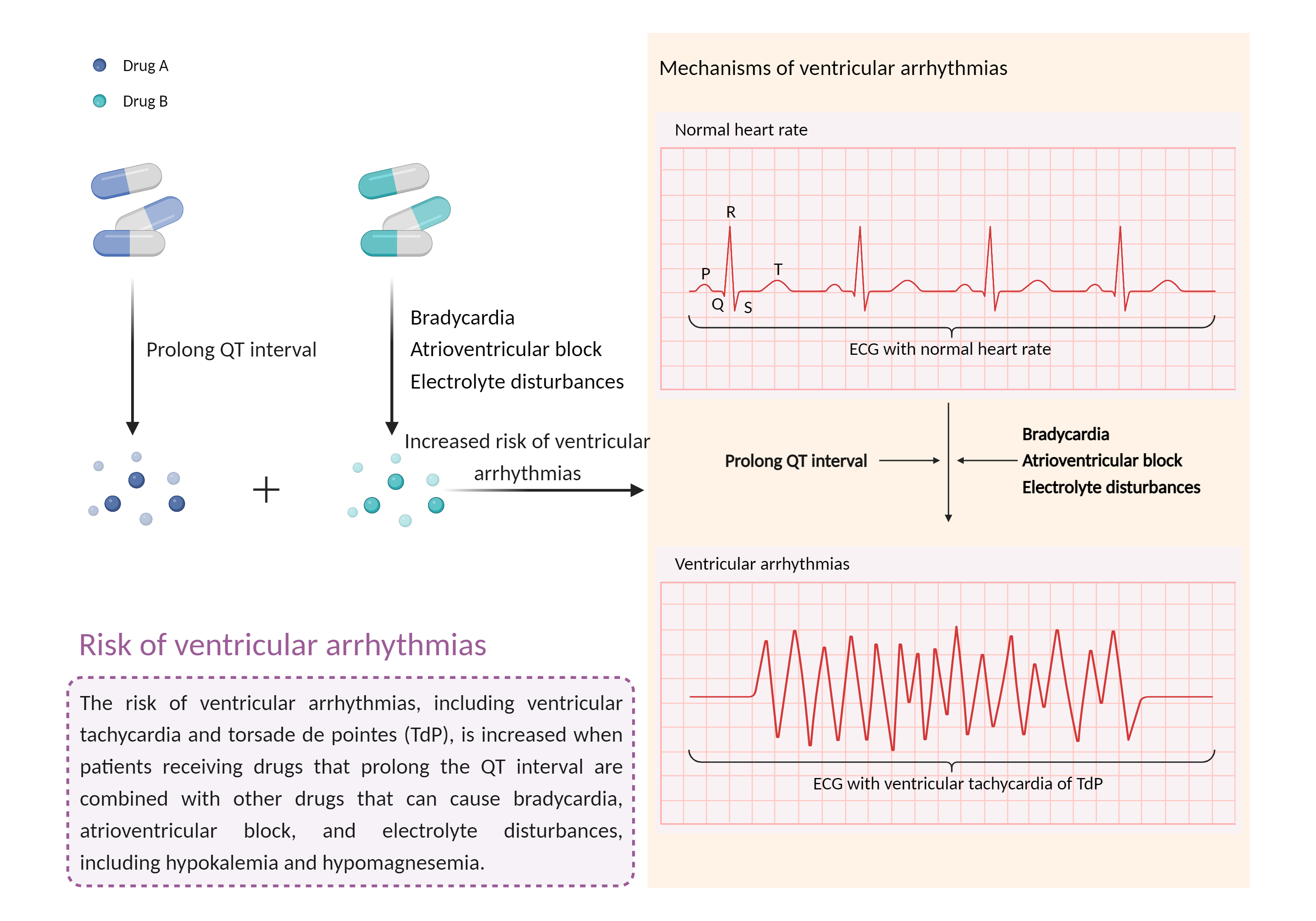
| Increased risk of ventricular arrhythmias Click to Show/Hide Mechanism Graph | |||||||||
 |
|||||||||
| Drug Name | Procainamide | Iothalamic acid | |||||||
| Mechanism | Prolong QT interval | Arrhythmogenic | |||||||
| Key Mechanism Factor 1 | |||||||||
| Factor Name | Ventricular arrhythmias | ||||||||
| Factor Description | Ventricular arrhythmias are abnormal heart rhythms that cause your heart's lower chambers to pump blood instead of pumping it. This can limit or stop your heart from supplying blood to your body. While some of these arrhythmias are harmless and do not cause symptoms, others can have serious, even fatal, effects on your body. | ||||||||
| Mechanism Description |
|
||||||||
| Recommended Action | |||||||||
|---|---|---|---|---|---|---|---|---|---|
| Management | Caution is advised if iodine-containing contrast media are used for coronary angiography in patients treated with class IA (e.g., disopyramide, quinidine, procainamide) or class III (e.g., amiodarone, dofetilide, ibutilide, sotalol) antiarrhythmic agents. Increased surveillance and ECG monitoring may be appropriate. Patients who receive outpatient angiographies should be advised to seek medical attention if they experience symptoms that could indicate the occurrence of arrhythmia such as dizziness, palpitations, or syncope. | ||||||||