Drug General Information (ID: DDIH5AD94F)
  Drug Name Citalopram Drug Info Ibutilide Drug Info
  Drug Type Small molecule Small molecule
  Therapeutic Class Antidepressants Antiarrhythmic Agents
  Structure

 Mechanism of Citalopram-Ibutilide Interaction (Severity Level: Major)
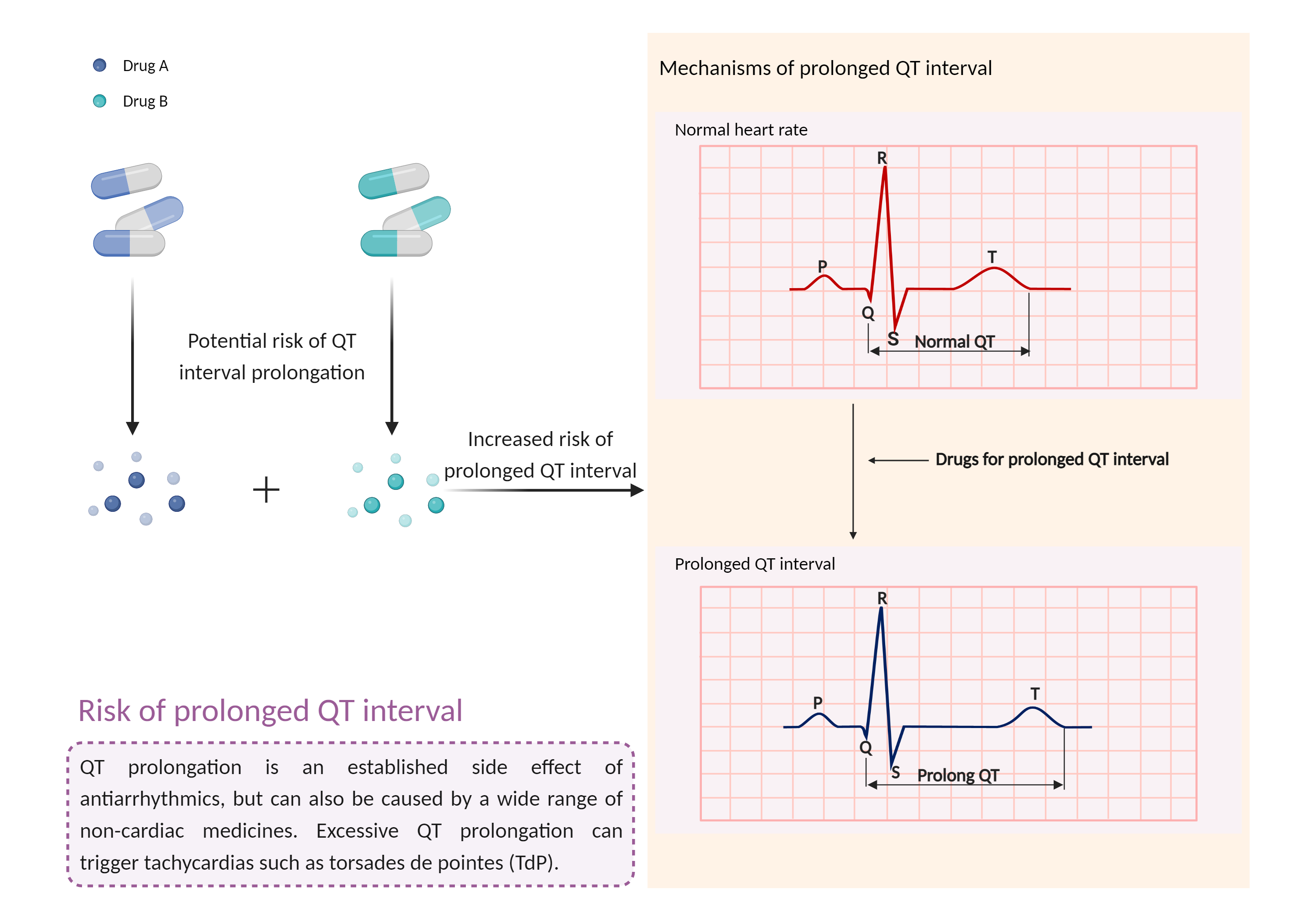
     Increased risk of prolong QT interval Click to Show/Hide Mechanism Graph
Could Not Find 2D Structure
      Drug Name Citalopram Ibutilide
      Mechanism Prolong QT interval Prolong QT interval
      Key Mechanism Factor 1
Factor Name QT interval
Factor Description Long QT syndrome is a heart signaling disorder that can cause a fast, chaotic heartbeat (arrhythmia). Many people may not exhibit symptoms, and usually the condition is detected during routine medical tests. In others, the most common symptoms include: sudden fainting, palpitations, dizziness, seizures, sudden death.
      Mechanism Description
  • Increased risk of prolong QT interval by the combination of Citalopram and Ibutilide 

Recommended Action
      Management The use of citalopram is not recommended in patients receiving other drugs that prolong the QT interval. Citalopram is also not recommended in patients with congenital long QT syndrome, bradycardia, hypokalemia, hypomagnesemia, recent acute myocardial infarction, or uncompensated heart failure.

References
1 Canadian Pharmacists Association.
2 Cerner Multum, Inc. "Australian Product Information.".
3 Cerner Multum, Inc. "UK Summary of Product Characteristics.".
4 FDA. U.S. Food and Drug Administration "FDA Drug Safety Communication: Abnormal heart rhythms associated with high doses of Celexa (citalopram hydrobromide).".
5 Product Information. Celexa (citalopram). Forest Pharmaceuticals, St. Louis, MO.
6 EMA. European Medicines Agency. European Union "EMA - List of medicines under additional monitoring.".
7 FDA. U.S. Food and Drug Administration "FDA Drug Safety Communication: Revised recommendations for cardiovascular monitoring and use of multiple sclerosis drug Gilenya (fingolimod).".