
Details of Drug-Drug Interaction
| Drug General Information (ID: DDIGVH7XIK) | |||||||||
|---|---|---|---|---|---|---|---|---|---|
| Drug Name | Carbamazepine | Drug Info | Adenosine | Drug Info | |||||
| Drug Type | Small molecule | Small molecule | |||||||
| Therapeutic Class | Anticonvulsants/Antimanic Agents | Antiarrhythmic Agents | |||||||
| Structure | |||||||||
| Mechanism of Carbamazepine-Adenosine Interaction (Severity Level: Moderate) | |||||||||
|---|---|---|---|---|---|---|---|---|---|
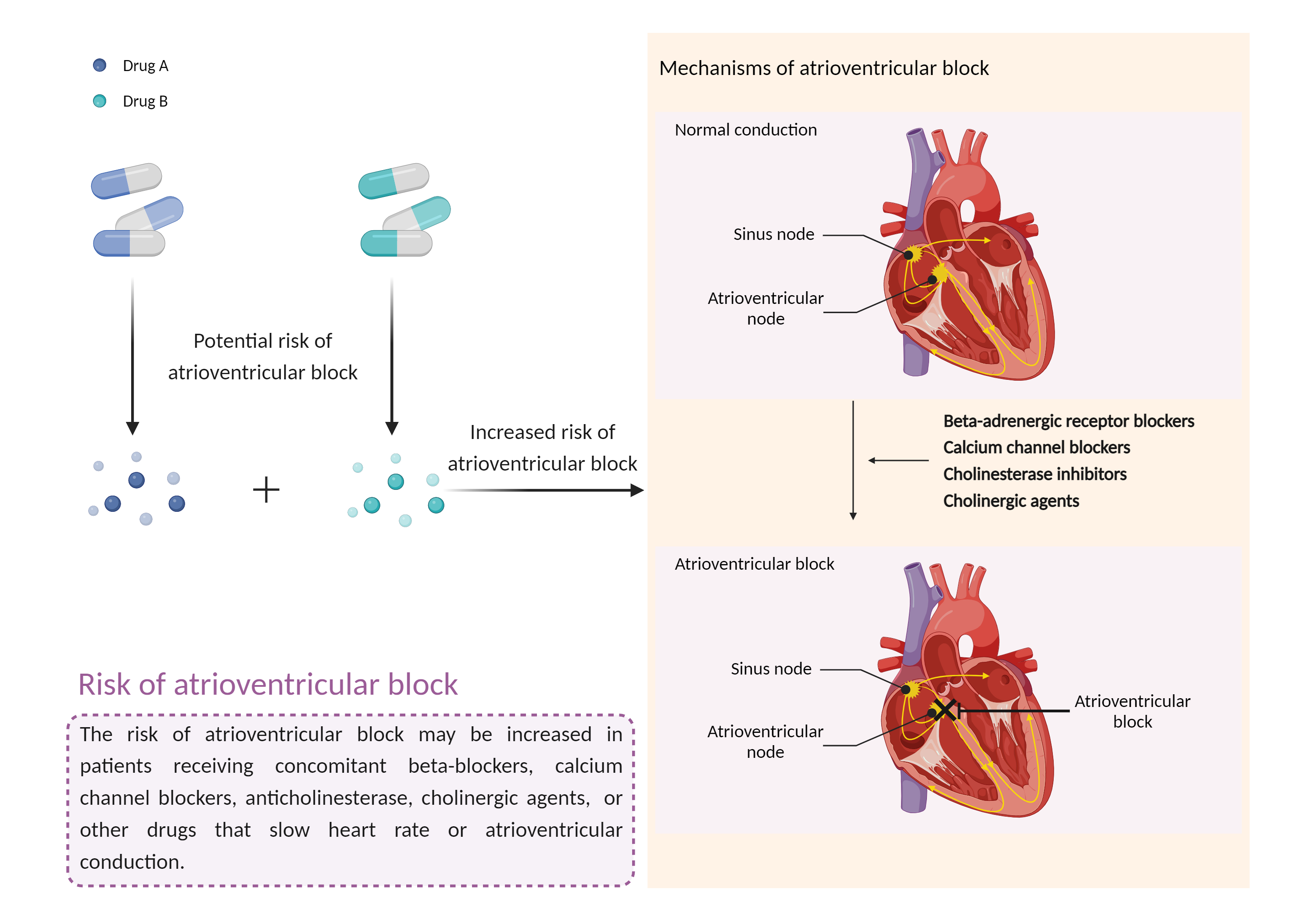
| Increased risk of atrioventricular block Click to Show/Hide Mechanism Graph | |||||||||
 |
|||||||||
| Drug Name | Carbamazepine | Adenosine | |||||||
| Mechanism | Delay atrioventricular conduction | Delay atrioventricular conduction | |||||||
| Key Mechanism Factor 1 | |||||||||
| Factor Name | Atrioventricular block | ||||||||
| Factor Description | Atrioventricular block is a type of cardiac conduction block that occurs when the electrical signal from the atria to the ventricles is impaired. In an Atrioventricular block, this electrical signal is either delayed or completely blocked. When the signal is completely blocked, the ventricles produce their own electrical signal to control the heart rate. The heart rate produced by the ventricles is much slower than that produced by the sinus node. | ||||||||
| Mechanism Description |
|
||||||||
| Recommended Action | |||||||||
|---|---|---|---|---|---|---|---|---|---|
| Management | Electrocardiographic rhythm monitoring and monitoring for increased cardiovascular toxicity are recommended during coadministration. | ||||||||