
Details of Drug-Drug Interaction
| Drug General Information (ID: DDIFQBKT4I) | |||||||||
|---|---|---|---|---|---|---|---|---|---|
| Drug Name | Botulinum Toxin Type B | Drug Info | Desipramine | Drug Info | |||||
| Drug Type | Protein/peptide | Small molecule | |||||||
| Therapeutic Class | Antidystonic Agents | Antidepressants | |||||||
| Mechanism of Botulinum Toxin Type B-Desipramine Interaction (Severity Level: Moderate) | |||||||||
|---|---|---|---|---|---|---|---|---|---|
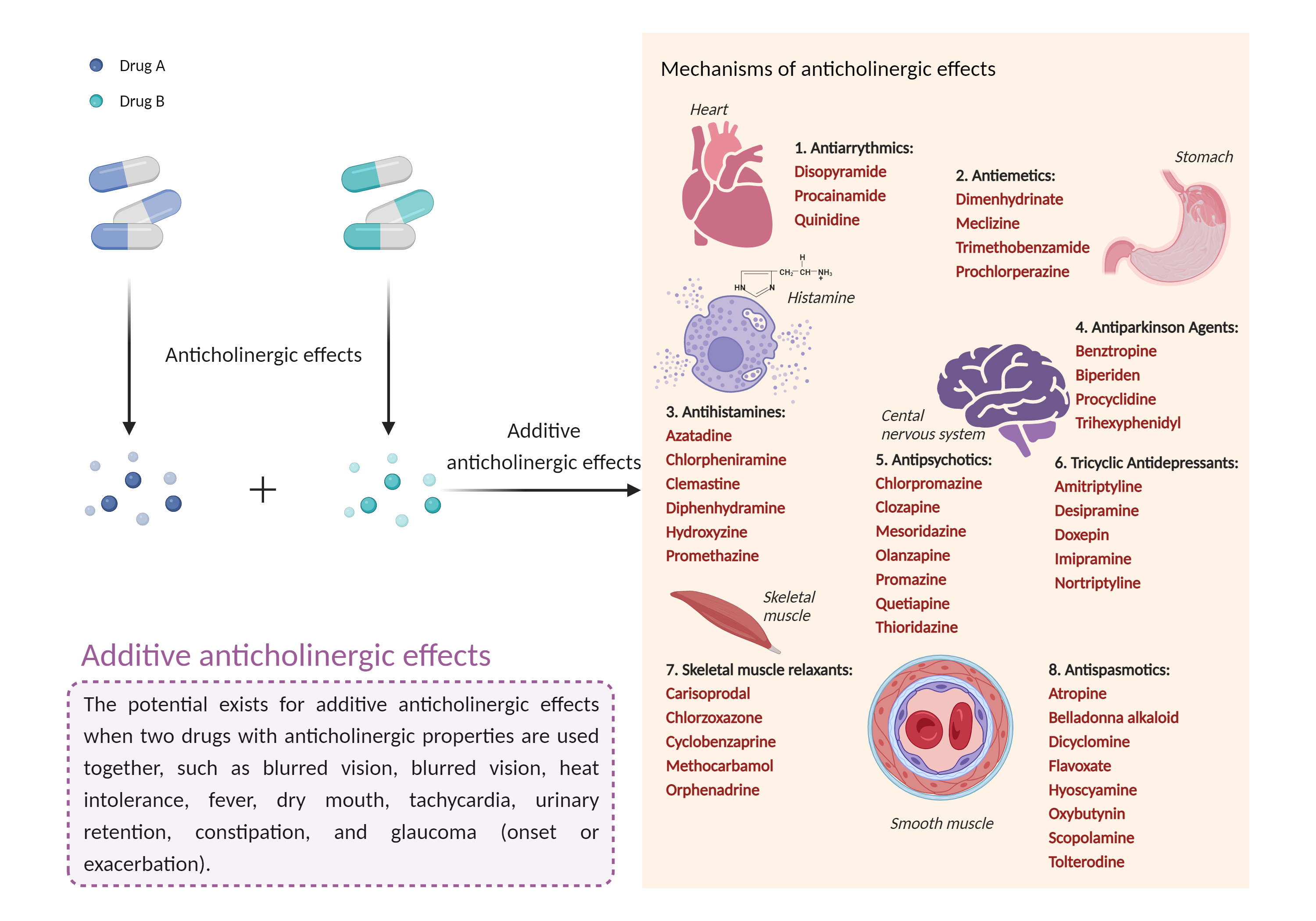
| Additive anticholinergic effects Click to Show/Hide Mechanism Graph | |||||||||
 |
|||||||||
| Drug Name | Botulinum Toxin Type B | Desipramine | |||||||
| Mechanism |
Anticholinergic effects Vesicle-associated membrane protein Inhibitor |
Anticholinergic effects Muscarinic acetylcholine receptor Antagonist |
|||||||
| Key Mechanism Factor 1 | |||||||||
| Factor Name | Vesicle-associated membrane protein 2 |
×
Structure
Sequence
MSATAATAPPAAPAGEGGPPAPPPNLTSNRRLQQTQAQVDEVVDIMRVNVDKVLERDQKLSELDDRADALQAGASQFETSAAKLKRKYWWKNLKMMIILGVICAIILIIIIVYFST
|
|||||||
| Gene Name | VAMP2 | ||||||||
| Uniprot ID | VAMP2_HUMAN | ||||||||
| KEGG Pathway | hsa:6844 | ||||||||
| Protein Family | Synaptobrevin family | ||||||||
| Protein Function |
Involved in the targeting and/or fusion of transport vesicles to their target membrane (By similarity). Major SNARE protein of synaptic vesicles which mediates fusion of synaptic vesicles to release neurotransmitters. Essential for fast vesicular exocytosis and activity-dependent neurotransmitter release as well as fast endocytosis that mediates rapid reuse of synaptic vesicles (By similarity) (PubMed:30929742). Modulates the gating characteristics of the delayed rectifier voltage-dependent potassium channel KCNB1.
Click to Show/Hide
|
||||||||
| Key Mechanism Factor 2 | |||||||||
| Factor Name | Muscarinic acetylcholine receptor M | Structure Sequence | |||||||
| Protein Family | G-protein coupled receptor 1 family | ||||||||
| Protein Function |
The muscarinic acetylcholine receptor mediates various cellular responses, including inhibition of adenylate cyclase, breakdown of phosphoinositides and modulation of potassium channels through the action of G proteins. Primary transducing effect is Pi turnover.
Click to Show/Hide
|
||||||||
| Mechanism Description |
|
||||||||
| Recommended Action | |||||||||
|---|---|---|---|---|---|---|---|---|---|
| Management | Patients should be advised that systemic anticholinergic side effects such as dry mouth, blurred vision, and urinary disorders may increase if agents with anticholinergic properties (e.g., sedating antihistamines antispasmodics neuroleptics phenothiazines skeletal muscle relaxants tricyclic antidepressants disopyramide) are used after administration of botulinum toxin. | ||||||||