
Details of Drug-Drug Interaction
| Drug General Information (ID: DDIDYCARQU) | |||||||||
|---|---|---|---|---|---|---|---|---|---|
| Drug Name | Trifluoperazine | Drug Info | Lofexidine | Drug Info | |||||
| Drug Type | Small molecule | Small molecule | |||||||
| Therapeutic Class | Antipsychotic Agents | Antihypertensive Agents | |||||||
| Structure | |||||||||
| Mechanism of Trifluoperazine-Lofexidine Interaction (Severity Level: Moderate) | |||||||||
|---|---|---|---|---|---|---|---|---|---|
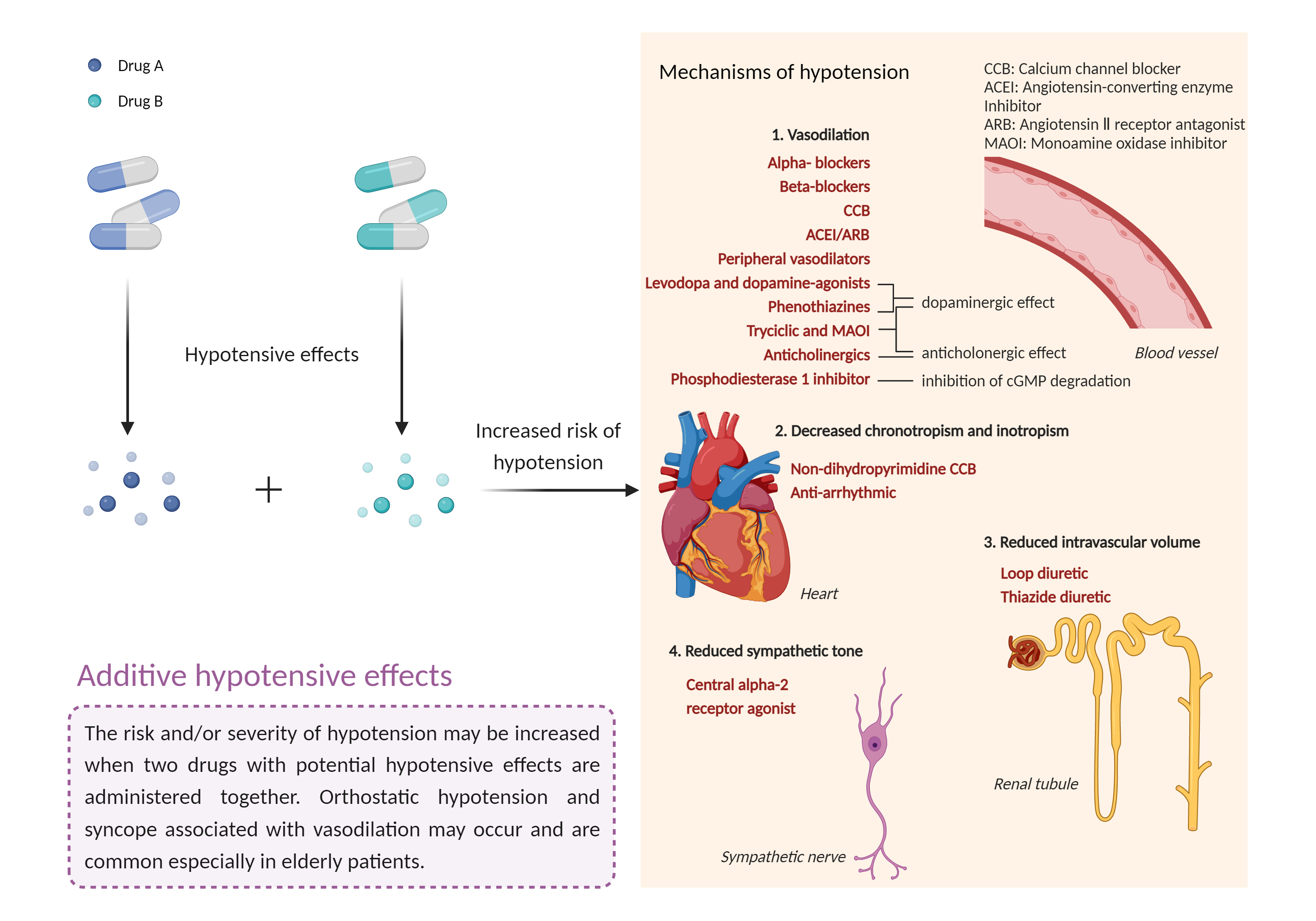
| Additive hypotensive effects Click to Show/Hide Mechanism Graph | |||||||||
 |
|||||||||
| Drug Name | Trifluoperazine | Lofexidine | |||||||
| Mechanism 1 |
Hypotensive effects Calmodulin Inhibitor |
Hypotensive effects Alpha-2 adrenergic receptor Agonist |
|||||||
| Key Mechanism Factor 1 | |||||||||
| Factor Name | Calmodulin-1 |
×
Structure
Sequence
MADQLTEEQIAEFKEAFSLFDKDGDGTITTKELGTVMRSLGQNPTEAELQDMINEVDADGNGTIDFPEFLTMMARKMKDTDSEEEIREAFRVFDKDGNGYISAAELRHVMTNLGEKLTDEEVDEMIREADIDGDGQVNYEEFVQMMTAK
|
|||||||
| Gene Name | CALM1 | ||||||||
| Uniprot ID | CALM1_HUMAN | ||||||||
| KEGG Pathway | hsa:801 | ||||||||
| Protein Family | Calmodulin family | ||||||||
| Protein Function |
Calmodulin mediates the control of a large number of enzymes, ion channels, aquaporins and other proteins through calcium-binding. Among the enzymes to be stimulated by the calmodulin-calcium complex are a number of protein kinases and phosphatases. Together with CCP110 and centrin, is involved in a genetic pathway that regulates the centrosome cycle and progression through cytokinesis (PubMed:16760425). Is a regulator of voltage-dependent L-type calcium channels (PubMed:31454269). Mediates calcium-dependent inactivation of CACNA1C (PubMed:26969752). Positively regulates calcium-activated potassium channel activity of KCNN2 (PubMed:27165696). Forms a potassium channel complex with KCNQ1 and regulates electrophysiological activity of the channel via calcium-binding (PubMed:25441029). Acts as a sensor to modulate the endoplasmic reticulum contacts with other organelles mediated by VMP1:ATP2A2 (PubMed:28890335).
Click to Show/Hide
|
||||||||
| Key Mechanism Factor 2 | |||||||||
| Factor Name | Adrenergic receptor alpha-2 | Structure Sequence | |||||||
| Protein Family | G-protein coupled receptor 1 family | ||||||||
| Protein Function |
Alpha-2 adrenergic receptors mediate the catecholamine-induced inhibition of adenylate cyclase through the action of G proteins. The rank order of potency for agonists of this receptor is oxymetazoline > clonidine > epinephrine > norepinephrine > phenylephrine > dopamine > p-synephrine > p-tyramine > serotonin = p-octopamine. For antagonists, the rank order is yohimbine > phentolamine = mianserine > chlorpromazine = spiperone = prazosin > propanolol > alprenolol = pindolol.
Click to Show/Hide
|
||||||||
| Mechanism Description |
|
||||||||
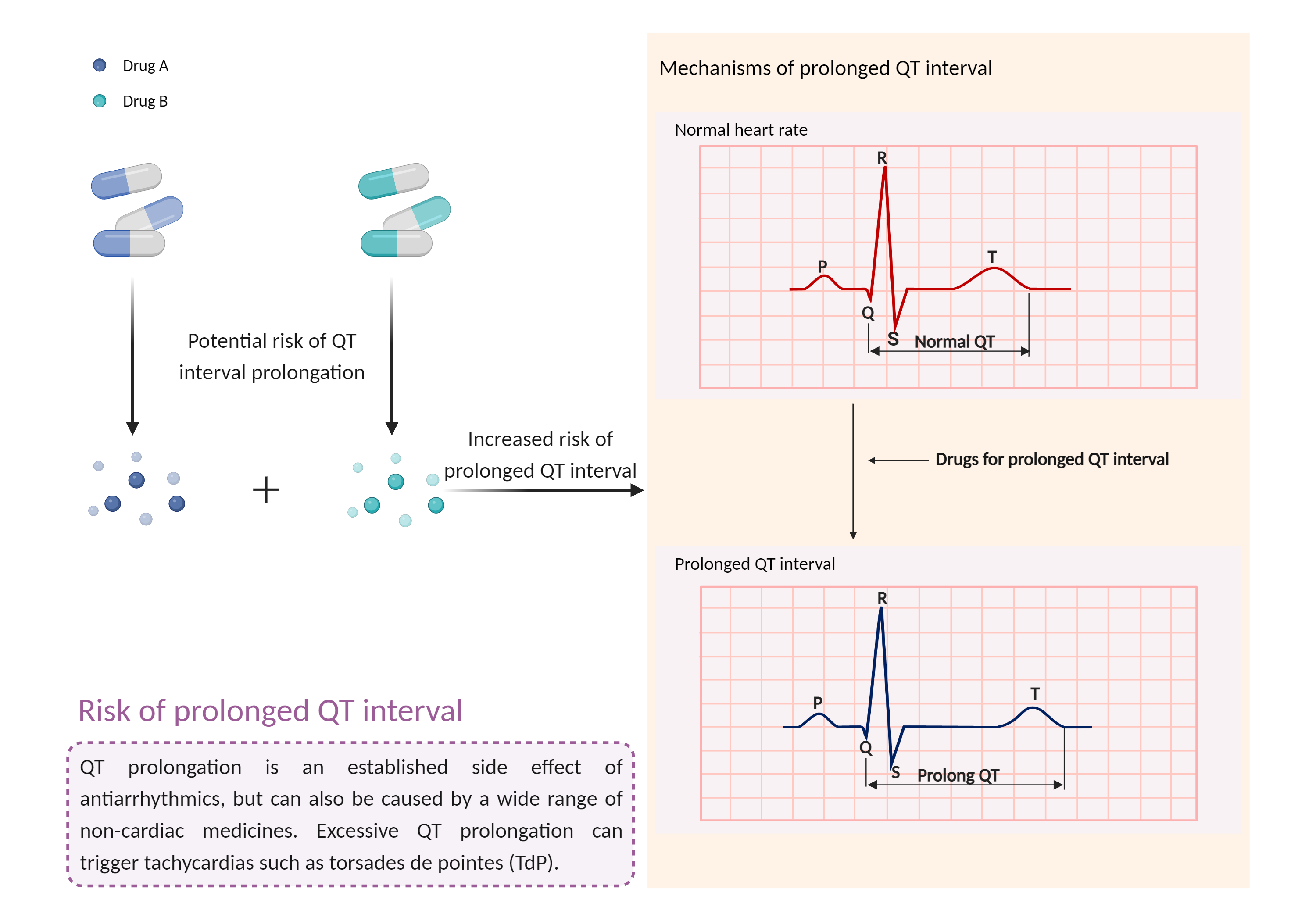
| Increased risk of prolong QT interval Click to Show/Hide Mechanism Graph | |||||||||
 |
|||||||||
| Drug Name | Trifluoperazine | Lofexidine | |||||||
| Mechanism 2 | Prolong QT interval | Prolong QT interval | |||||||
| Key Mechanism Factor 3 | |||||||||
| Factor Name | QT interval | ||||||||
| Factor Description | Long QT syndrome is a heart signaling disorder that can cause a fast, chaotic heartbeat (arrhythmia). Many people may not exhibit symptoms, and usually the condition is detected during routine medical tests. In others, the most common symptoms include: sudden fainting, palpitations, dizziness, seizures, sudden death. | ||||||||
| Mechanism Description |
|
||||||||
| Recommended Action | |||||||||
|---|---|---|---|---|---|---|---|---|---|
| Management | Caution is recommended if lofexidine is used in combination with other drugs that can prolong the QT interval. Periodic monitoring with on-treatment electrocardiograms and serum electrolytes (magnesium, potassium) should be considered. Patients should be advised to seek prompt medical attention if they experience symptoms that could indicate the occurrence of torsade de pointes such as dizziness, lightheadedness, fainting, palpitation, irregular heart rhythm, shortness of breath, or syncope. | ||||||||