
Details of Drug-Drug Interaction
| Drug General Information (ID: DDIDL67PQK) | |||||||||
|---|---|---|---|---|---|---|---|---|---|
| Drug Name | Cisplatin | Drug Info | Plazomicin | Drug Info | |||||
| Drug Type | Small molecule | Small molecule | |||||||
| Therapeutic Class | Antineoplastics | Aminoglycosides//Antibiotics | |||||||
| Structure | |||||||||
| Mechanism of Cisplatin-Plazomicin Interaction (Severity Level: Moderate) | |||||||||
|---|---|---|---|---|---|---|---|---|---|
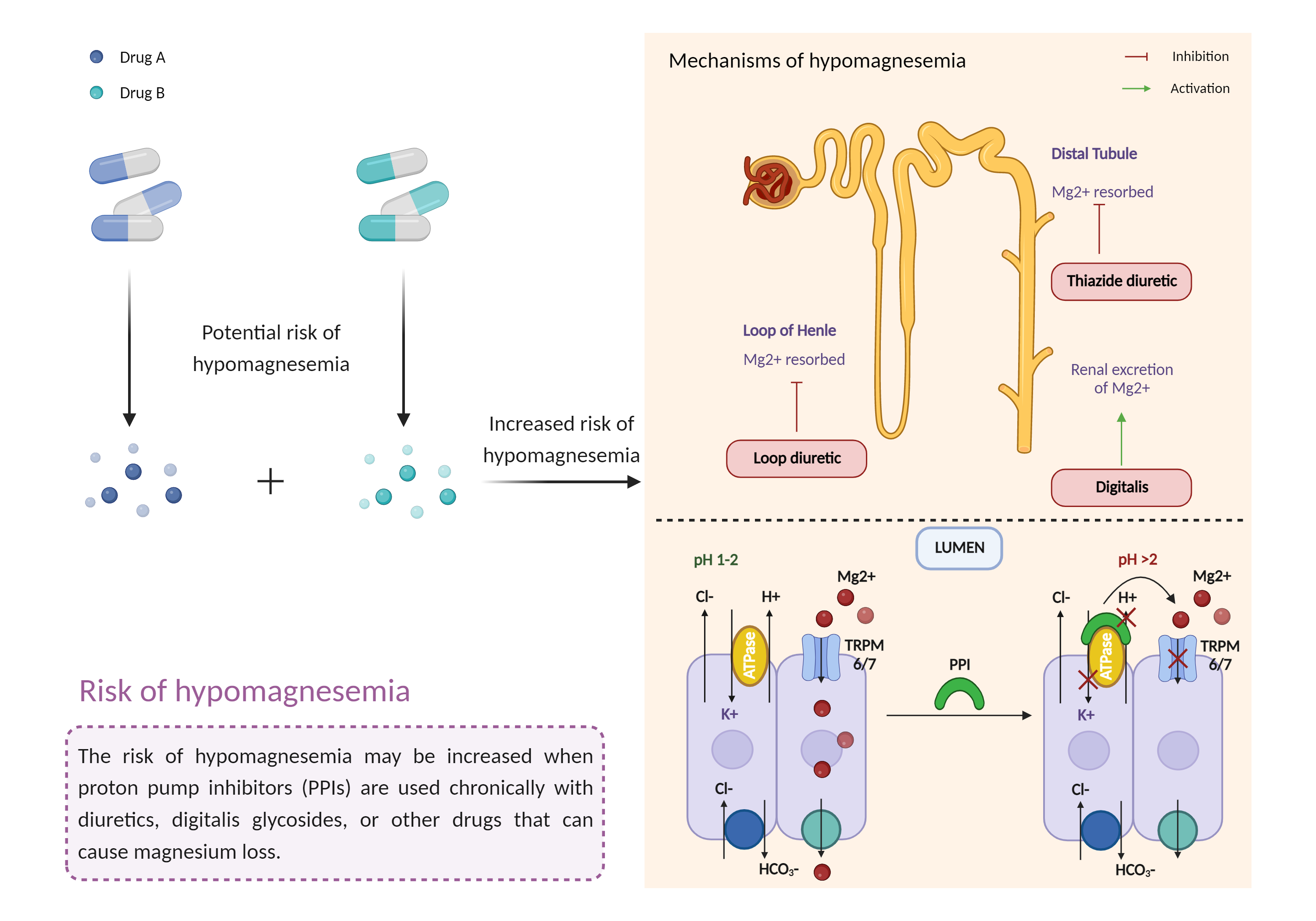
| Increased risk of hypomagnesemia Click to Show/Hide Mechanism Graph | |||||||||
 |
|||||||||
| Drug Name | Cisplatin | Plazomicin | |||||||
| Mechanism | Hypomagnesemia | Hypomagnesemia | |||||||
| Key Mechanism Factor 1 | |||||||||
| Factor Name | Hypomagnesemia | ||||||||
| Factor Description | Hypomagnesemia is a condition that occurs when you have too much magnesium in your body. Symptoms of hypomagnesemia include: nausea, vomiting, neurological damage, abnormally low blood pressure (hypotension), flushing, and headaches. | ||||||||
| Mechanism Description |
|
||||||||
| Recommended Action | |||||||||
|---|---|---|---|---|---|---|---|---|---|
| Management | In patients currently receiving cisplatin therapy, the use of less nephrotoxic antimicrobials is preferable. If cisplatin and an aminoglycoside must be used together, renal function and serum magnesium should be monitored carefully. | ||||||||