
Details of Drug-Drug Interaction
| Drug General Information (ID: DDIB8GLQH3) | |||||||||
|---|---|---|---|---|---|---|---|---|---|
| Drug Name | Clozapine | Drug Info | Cariprazine | Drug Info | |||||
| Drug Type | Small molecule | Small molecule | |||||||
| Therapeutic Class | Antipsychotic Agents | Atypical Antipsychotics | |||||||
| Structure | |||||||||
| Mechanism of Clozapine-Cariprazine Interaction (Severity Level: Major) | |||||||||
|---|---|---|---|---|---|---|---|---|---|
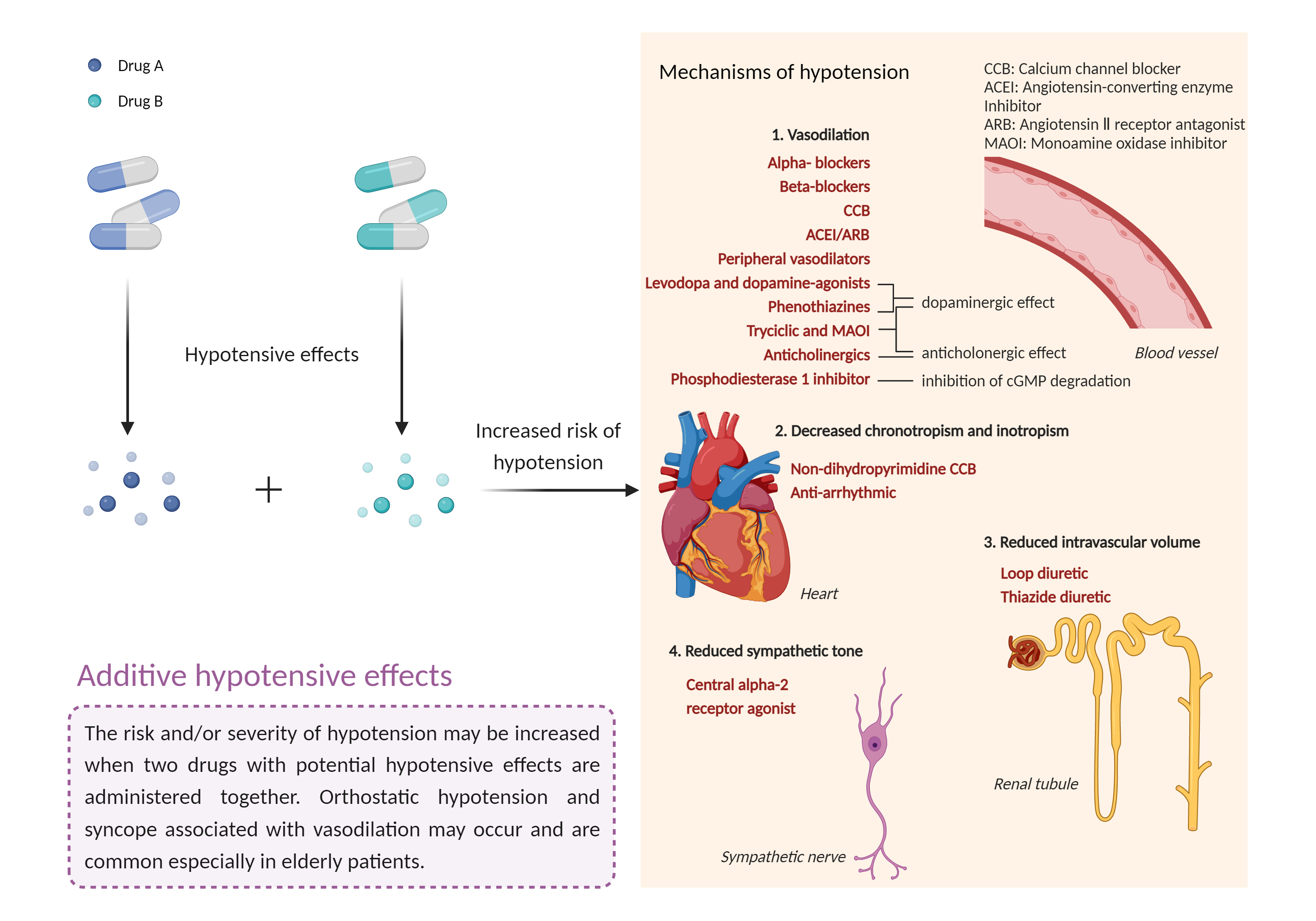
| Additive hypotensive effects Click to Show/Hide Mechanism Graph | |||||||||
 |
|||||||||
| Drug Name | Clozapine | Cariprazine | |||||||
| Mechanism 1 | Antihypertensive agent | Antihypertensive agent | |||||||
| Key Mechanism Factor 1 | |||||||||
| Factor Name | Hypotensive effects | ||||||||
| Factor Description | Hypotension is a blood pressure reading below the prescribed limit (90/60 mmHg). Symptoms of hypotension may include: blurred or faded vision , dizziness or light-headedness, fainting , fatigue , difficulty concentrating, nausea. | ||||||||
| Mechanism Description |
|
||||||||
| Mechanism 2 | Hypotensive effects | Antihypertensive agent | |||||||
| Key Mechanism Factor 2 | |||||||||
| Factor Name | Hypotensive effects | ||||||||
| Factor Description | Hypotension is a blood pressure reading below the prescribed limit (90/60 mmHg). Symptoms of hypotension may include: blurred or faded vision , dizziness or light-headedness, fainting , fatigue , difficulty concentrating, nausea. | ||||||||
| Mechanism Description |
|
||||||||
| Mechanism 3 | Antihypertensive agent | Hypotensive effects | |||||||
| Key Mechanism Factor 3 | |||||||||
| Factor Name | Hypotensive effects | ||||||||
| Factor Description | Hypotension is a blood pressure reading below the prescribed limit (90/60 mmHg). Symptoms of hypotension may include: blurred or faded vision , dizziness or light-headedness, fainting , fatigue , difficulty concentrating, nausea. | ||||||||
| Mechanism Description |
|
||||||||
| Mechanism 4 | Hypotensive effects | Hypotensive effects | |||||||
| Key Mechanism Factor 4 | |||||||||
| Factor Name | Hypotensive effects | ||||||||
| Factor Description | Hypotension is a blood pressure reading below the prescribed limit (90/60 mmHg). Symptoms of hypotension may include: blurred or faded vision , dizziness or light-headedness, fainting , fatigue , difficulty concentrating, nausea. | ||||||||
| Mechanism Description |
|
||||||||
| Recommended Action | |||||||||
|---|---|---|---|---|---|---|---|---|---|
| Management | Caution is advised when clozapine is initiated in patients receiving other psychotropic drugs. Vital signs should be closely monitored. Patients who have had even a brief interval off clozapine (i.e. 2 or more days since the last dose) should be restarted with 12.5 mg once or twice daily. The potential for additive effects on the QT interval and increased risk of torsade de pointes arrhythmia should also be considered when clozapine is used in combination with phenothiazines, tricyclic antidepressants, some atypical antipsychotics (e.g., asenapine, quetiapine, iloperidone, iloperidone, paliperidone, risperidone, ziprasidone), or other psychotherapeutic agents that can prolong the QT interval such as amoxapine, haloperidol, maprotiline, mirtazapine, and trazodone. Serum electrolytes, including potassium, magnesium and calcium, should be measured at baseline and periodically during treatment, and any abnormalities corrected prior to initiating clozapine. Routine ECG assessment may detect QTc prolongation but is not always effective in preventing arrhythmias. Clozapine treatment should be discontinued if the QTc interval exceeds 500 msec. Patients should be advised to seek prompt medical attention if they experience symptoms that could indicate the occurrence of torsade de pointes such as dizziness, lightheadedness, fainting, palpitation, irregular heart rhythm, shortness of breath, or syncope. | ||||||||