| Mechanism of Procainamide-Ofloxacin Interaction
(Severity Level: Major)
|
|
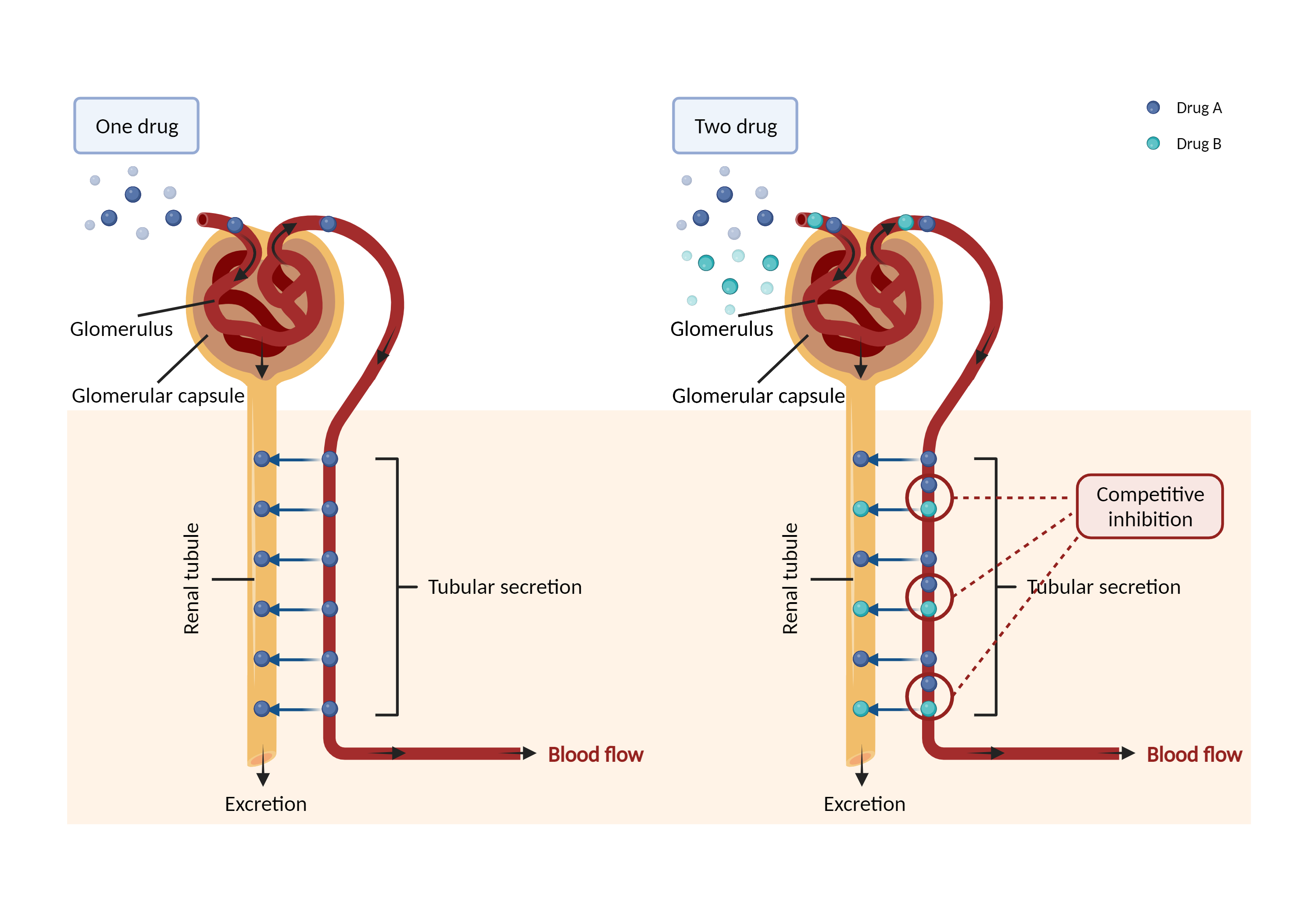
Competitive inhibition of renal tubular secretion
Click to Show/Hide Mechanism Graph
|
 |
| Drug Name |
Procainamide |
Ofloxacin |
|
Mechanism 1
|
Procainamide |
Competitive inhibition of renal tubular secretion of procainamide |
| Key Mechanism Factor 1 |
| Factor Name |
Renal tubular secretion |
| Factor Description |
Renal tubular secretion allows selective transfer of substances from the blood around the capillaries into the renal tubules via filtrate. Drug excretion may be reduced when two drugs compete for renal tubular secretion. |
| Mechanism Description |
- Decreased elimination of Procainamide caused by Ofloxacin mediated competitive inhibition of renal tubular secretion
|
|
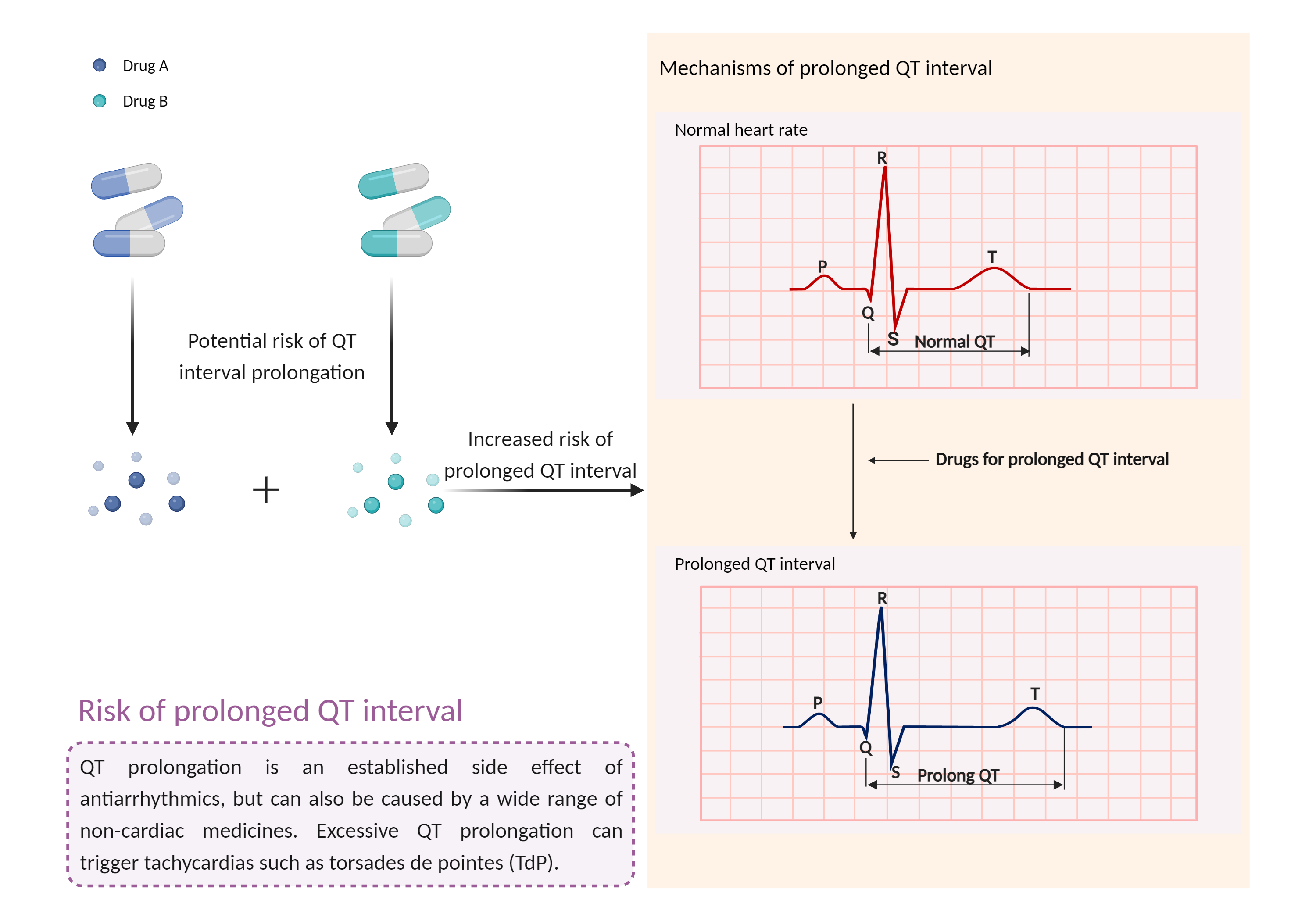
Increased risk of prolong QT interval
Click to Show/Hide Mechanism Graph
|
 |
| Drug Name |
Procainamide |
Ofloxacin |
|
Mechanism 2
|
Prolong QT interval |
Prolong QT interval |
| Key Mechanism Factor 2 |
| Factor Name |
QT interval |
| Factor Description |
Long QT syndrome is a heart signaling disorder that can cause a fast, chaotic heartbeat (arrhythmia). Many people may not exhibit symptoms, and usually the condition is detected during routine medical tests. In others, the most common symptoms include: sudden fainting, palpitations, dizziness, seizures, sudden death. |
| Mechanism Description |
- Increased risk of prolong QT interval by the combination of Procainamide and Ofloxacin
|
