Drug General Information (ID: DDI9YA2BFX)
  Drug Name Asparaginase Escherichia coli Drug Info Caplacizumab Drug Info
  Drug Type Protein/peptide Monoclonal antibody
  Therapeutic Class Antineoplastics Platelet Aggregation Inhibitors

 Mechanism of Asparaginase Escherichia coli-Caplacizumab Interaction (Severity Level: Moderate)
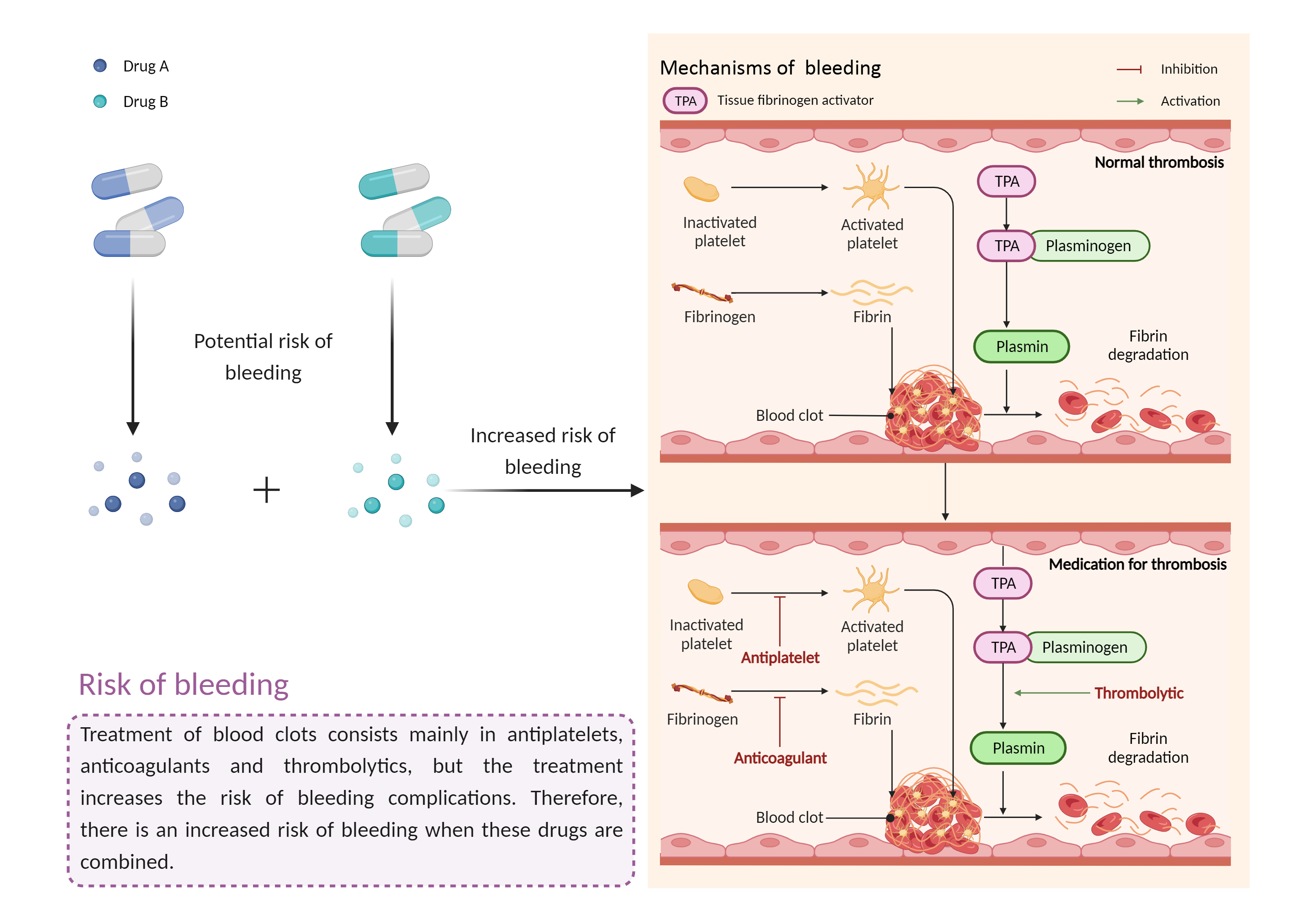
     Increased risk of bleeding Click to Show/Hide Mechanism Graph
Could Not Find 2D Structure
      Drug Name Asparaginase Escherichia coli Caplacizumab
      Mechanism Risk of bleeding
Anticoagulant effects 
Risk of bleeding
Antiplatelet 
      Key Mechanism Factor 1
Factor Name Bleeding
Factor Description Patients may be at risk for bleeding when the outcome of a disease or disease treatment confounds the standard mechanisms for maintaining hemostasis. Signs or symptoms of abnormal bleeding include: bleeding that takes a long time to stop (including nosebleeds, bleeding gums, bleeding from cuts and abrasions, and menstrual bleeding); severe unexplained bruising, or bruising that becomes larger; blood in the urine or stool, etc.
      Mechanism Description
  • Increased risk of bleeding by the combination of Asparaginase Escherichia coli and Caplacizumab 

Recommended Action
      Management Coagulation parameters should be monitored at baseline and periodically during concomitant treatment with asparaginase and anticoagulants such as heparin, dipyridamole, aspirin and nonsteroidal anti-inflammatory drugs. Patients should be advised to promptly report any signs and symptoms of bleeding.

References
1 Caruso V, Iacoviello L, Di Castelnuovo A, et.al "Thrombotic complications in childhood acute lymphoblastic leukemia: a meta-analysis of 17 prospective studies comprising 1752 pediatric patients." Blood 108 (2006): 2216-22. [PMID: 16804111]
2 Cerner Multum, Inc. "UK Summary of Product Characteristics.".
3 Duarte X, Esteves S, Neto AM, Pereira F "Incidence and risk factors for central nervous system thrombosis in paediatric acute lymphoblastic leukaemia during intensive asparaginase treatment: a single-centre study." Br J Haematol 174 (2016): 280-91. [PMID: 27018199]