
Details of Drug-Drug Interaction
| Drug General Information (ID: DDI9M7YTSR) | |||||||||
|---|---|---|---|---|---|---|---|---|---|
| Drug Name | Metoclopramide | Drug Info | Alimemazine | Drug Info | |||||
| Drug Type | Small molecule | Small molecule | |||||||
| Therapeutic Class | Antiemetics | Antihistamines | |||||||
| Structure | |||||||||
| Mechanism of Metoclopramide-Alimemazine Interaction (Severity Level: Major) | |||||||||
|---|---|---|---|---|---|---|---|---|---|
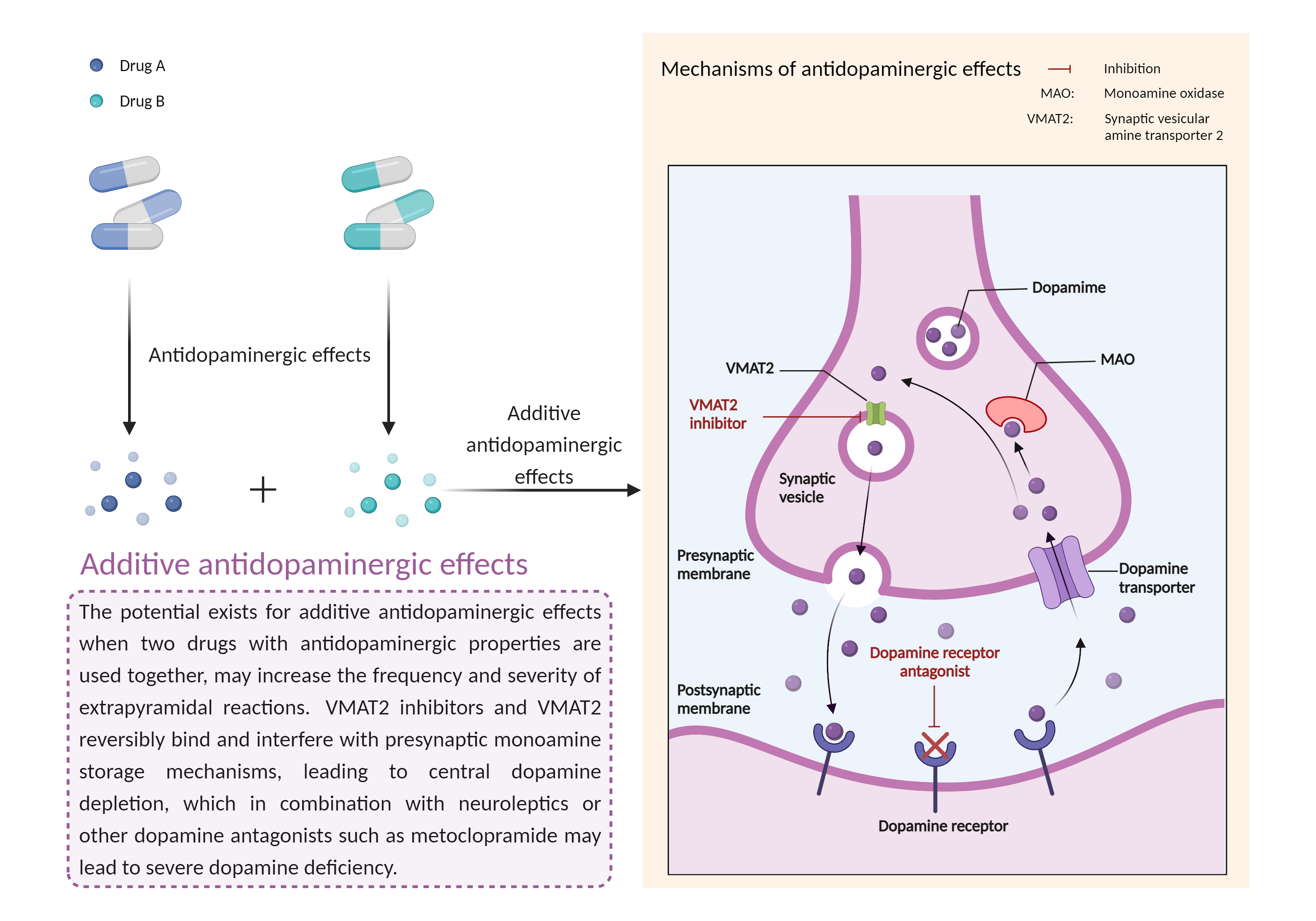
| Additive antidopaminergic effects Click to Show/Hide Mechanism Graph | |||||||||
 |
|||||||||
| Drug Name | Metoclopramide | Alimemazine | |||||||
| Mechanism | Extrapyramidal effects | Extrapyramidal effects | |||||||
| Key Mechanism Factor 1 | |||||||||
| Factor Name | Antidopaminergic effects | ||||||||
| Factor Description | Antidopamines are medications that inhibit or block the neurotransmitter activity of dopamine or related substances. Dopamine deficiency is associated with Parkinson's disease, restless legs syndrome and depression, and low dopamine levels can make you feel tired, moody, unmotivated and many other symptoms. | ||||||||
| Mechanism Description |
|
||||||||
| Recommended Action | |||||||||
|---|---|---|---|---|---|---|---|---|---|
| Management | Due to the potential for increased risk of serious and potentially irreversible extrapyramidal reactions, metoclopramide should not be prescribed in combination with other antidopaminergic agents. In addition, metoclopramide should not be used for longer than 12 weeks except in rare cases where therapeutic benefit is anticipated to outweigh the risk of developing tardive dyskinesia. | ||||||||