
Details of Drug-Drug Interaction
| Drug General Information (ID: DDI73QEJ95) | |||||||||
|---|---|---|---|---|---|---|---|---|---|
| Drug Name | Halothane | Drug Info | Lofexidine | Drug Info | |||||
| Drug Type | Small molecule | Small molecule | |||||||
| Therapeutic Class | Anesthetics | Antihypertensive Agents | |||||||
| Structure | |||||||||
| Mechanism of Halothane-Lofexidine Interaction (Severity Level: Moderate) | |||||||||
|---|---|---|---|---|---|---|---|---|---|
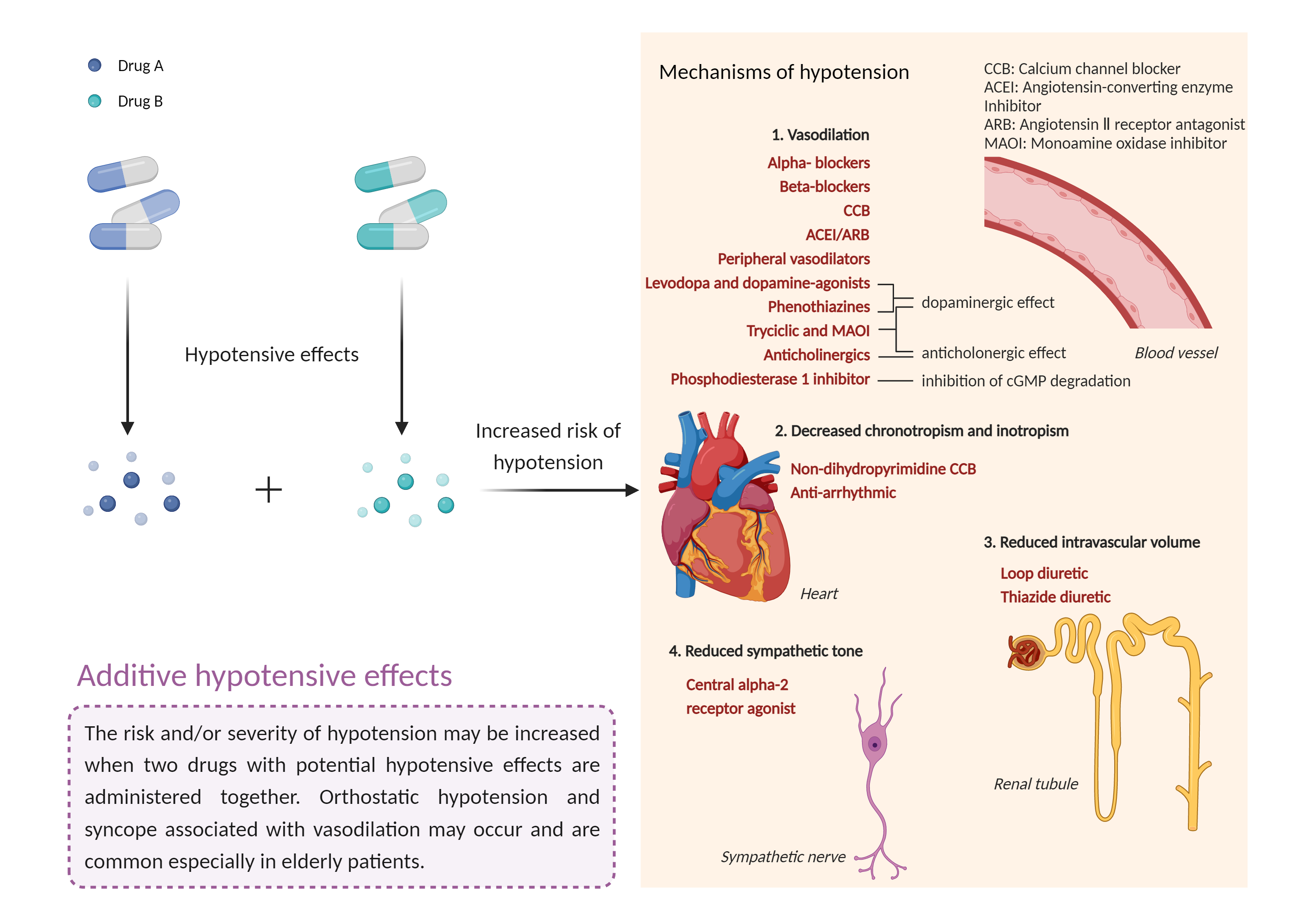
| Additive hypotensive effects Click to Show/Hide Mechanism Graph | |||||||||
 |
|||||||||
| Drug Name | Halothane | Lofexidine | |||||||
| Mechanism 1 |
Hypotensive effects Gamma-aminobutyric acid receptor Agonist |
Hypotensive effects Alpha-2 adrenergic receptor Agonist |
|||||||
| Key Mechanism Factor 1 | |||||||||
| Factor Name | GABA (A) receptor | Structure Sequence | |||||||
| Protein Family | Ligand-gated ion channel (TC 1.A.9) family | ||||||||
| Protein Function |
Ligand-gated chloride channel which is a component of the heteropentameric receptor for GABA, the major inhibitory neurotransmitter in the brain (PubMed:23909897, PubMed:25489750, PubMed:29950725). Plays an important role in the formation of functional inhibitory GABAergic synapses in addition to mediating synaptic inhibition as a GABA-gated ion channel (PubMed:23909897, PubMed:25489750). The gamma2 subunit is necessary but not sufficient for a rapid formation of active synaptic contacts and the synaptogenic effect of this subunit is influenced by the type of alpha and beta subunits present in the receptor pentamer (By similarity). The alpha1/beta2/gamma2 receptor and the alpha1/beta3/gamma2 receptor exhibit synaptogenic activity (PubMed:23909897, PubMed:25489750). GABRA1-mediated plasticity in the orbitofrontal cortex regulates context-dependent action selection (By similarity). Functions also as histamine receptor and mediates cellular responses to histamine (By similarity).
Click to Show/Hide
|
||||||||
| Key Mechanism Factor 2 | |||||||||
| Factor Name | Adrenergic receptor alpha-2 | Structure Sequence | |||||||
| Protein Family | G-protein coupled receptor 1 family | ||||||||
| Protein Function |
Alpha-2 adrenergic receptors mediate the catecholamine-induced inhibition of adenylate cyclase through the action of G proteins. The rank order of potency for agonists of this receptor is oxymetazoline > clonidine > epinephrine > norepinephrine > phenylephrine > dopamine > p-synephrine > p-tyramine > serotonin = p-octopamine. For antagonists, the rank order is yohimbine > phentolamine = mianserine > chlorpromazine = spiperone = prazosin > propanolol > alprenolol = pindolol.
Click to Show/Hide
|
||||||||
| Mechanism Description |
|
||||||||
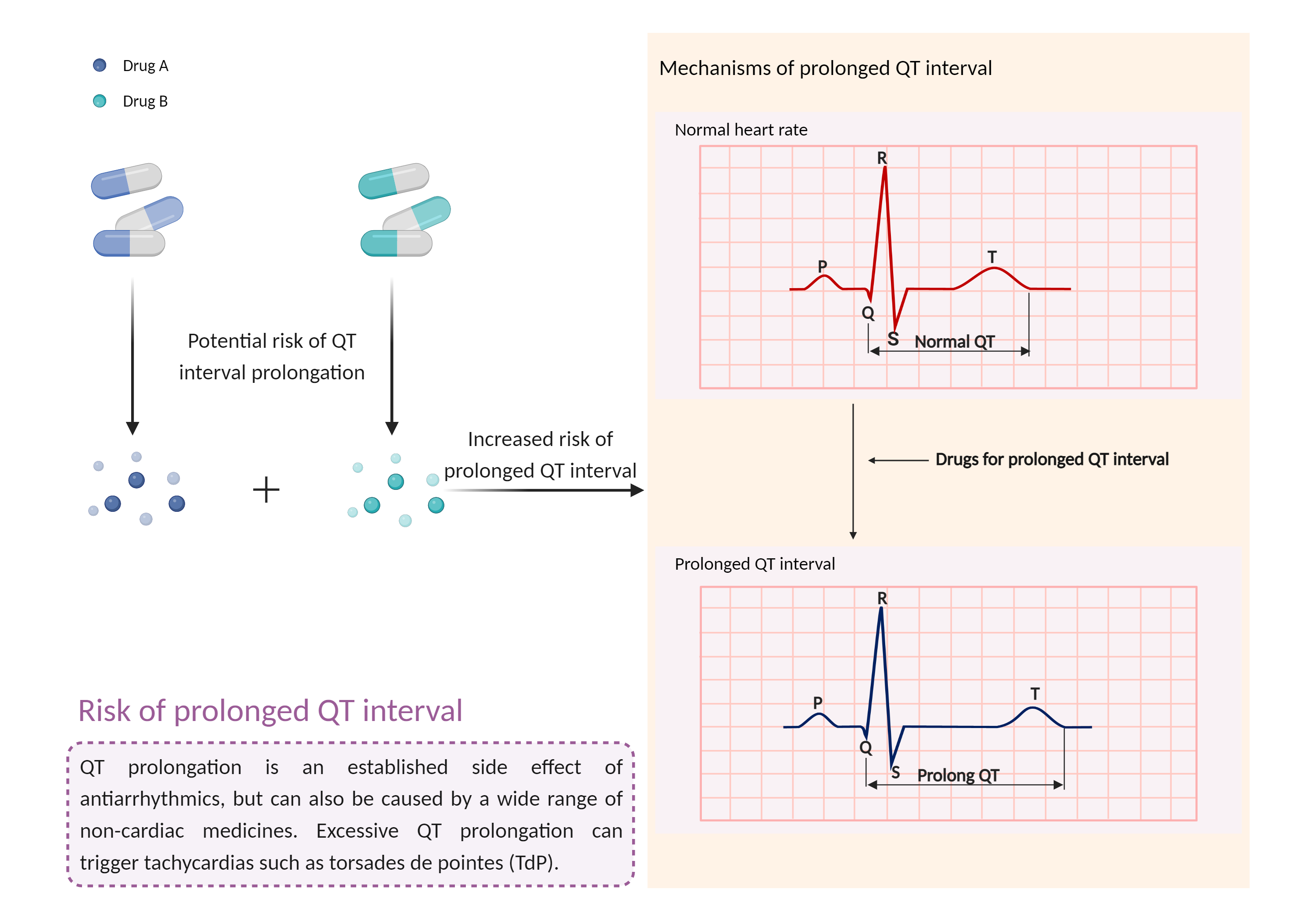
| Increased risk of prolong QT interval Click to Show/Hide Mechanism Graph | |||||||||
 |
|||||||||
| Drug Name | Halothane | Lofexidine | |||||||
| Mechanism 2 | Prolong QT interval | Prolong QT interval | |||||||
| Key Mechanism Factor 3 | |||||||||
| Factor Name | QT interval | ||||||||
| Factor Description | Long QT syndrome is a heart signaling disorder that can cause a fast, chaotic heartbeat (arrhythmia). Many people may not exhibit symptoms, and usually the condition is detected during routine medical tests. In others, the most common symptoms include: sudden fainting, palpitations, dizziness, seizures, sudden death. | ||||||||
| Mechanism Description |
|
||||||||
| Recommended Action | |||||||||
|---|---|---|---|---|---|---|---|---|---|
| Management | Caution is recommended if lofexidine is used in combination with other drugs that can prolong the QT interval. Periodic monitoring with on-treatment electrocardiograms and serum electrolytes (magnesium, potassium) should be considered. Patients should be advised to seek prompt medical attention if they experience symptoms that could indicate the occurrence of torsade de pointes such as dizziness, lightheadedness, fainting, palpitation, irregular heart rhythm, shortness of breath, or syncope. | ||||||||