
Details of Drug-Drug Interaction
| Drug General Information (ID: DDI6PCZ74F) | |||||||||
|---|---|---|---|---|---|---|---|---|---|
| Drug Name | Amikacin (liposome) | Drug Info | Cefotaxime | Drug Info | |||||
| Drug Type | Small molecule | Small molecule | |||||||
| Therapeutic Class | Antibiotics | Antibiotics | |||||||
| Structure | |||||||||
| Mechanism of Amikacin (liposome)-Cefotaxime Interaction (Severity Level: Moderate) | |||||||||
|---|---|---|---|---|---|---|---|---|---|
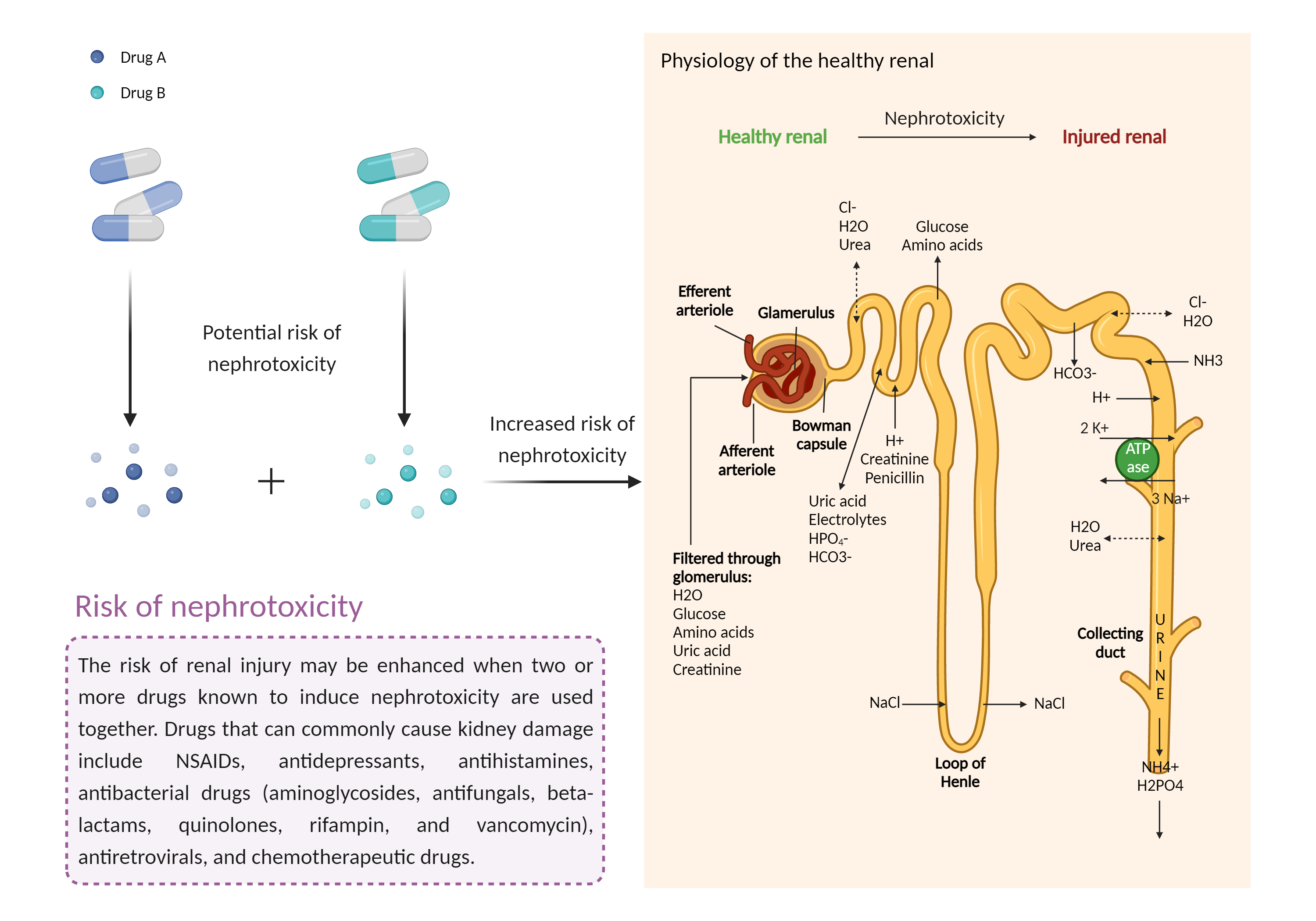
| Increased risk of nephrotoxicity Click to Show/Hide Mechanism Graph | |||||||||
 |
|||||||||
| Drug Name | Amikacin (liposome) | Cefotaxime | |||||||
| Mechanism | Nephrotoxicity | Nephrotoxicity | |||||||
| Key Mechanism Factor 1 | |||||||||
| Factor Name | Nephrotoxicity | ||||||||
| Factor Description | The combination of drugs that can induce nephrotoxicity may increase the risk of kidney injury. When kidney injury occurs, the inability to remove excess urine and waste from the body can lead to high levels of urea nitrogen, creatinine, and electrolytes (such as potassium and magnesium) in the blood. | ||||||||
| Mechanism Description |
|
||||||||
| Recommended Action | |||||||||
|---|---|---|---|---|---|---|---|---|---|
| Management | The lowest effective dosages of aminoglycosides and cephalosporins should be used when they are prescribed in combination. Renal function should be monitored closely. The same precaution may be applicable when aminoglycosides are administered via irrigation, intrapleurally, intraperitoneally or orally, since aminoglycosides can be systemically absorbed via these routes however, clinical data are lacking. | ||||||||