
Details of Drug-Drug Interaction
| Drug General Information (ID: DDI6MGCVPR) | |||||||||
|---|---|---|---|---|---|---|---|---|---|
| Drug Name | Cisplatin | Drug Info | Paclitaxel (protein-bound) | Drug Info | |||||
| Drug Type | Small molecule | Small molecule | |||||||
| Therapeutic Class | Antineoplastics | Antineoplastics/Mitotic Inhibitors | |||||||
| Structure | |||||||||
| Mechanism of Cisplatin-Paclitaxel (protein-bound) Interaction (Severity Level: Moderate) | |||||||||
|---|---|---|---|---|---|---|---|---|---|
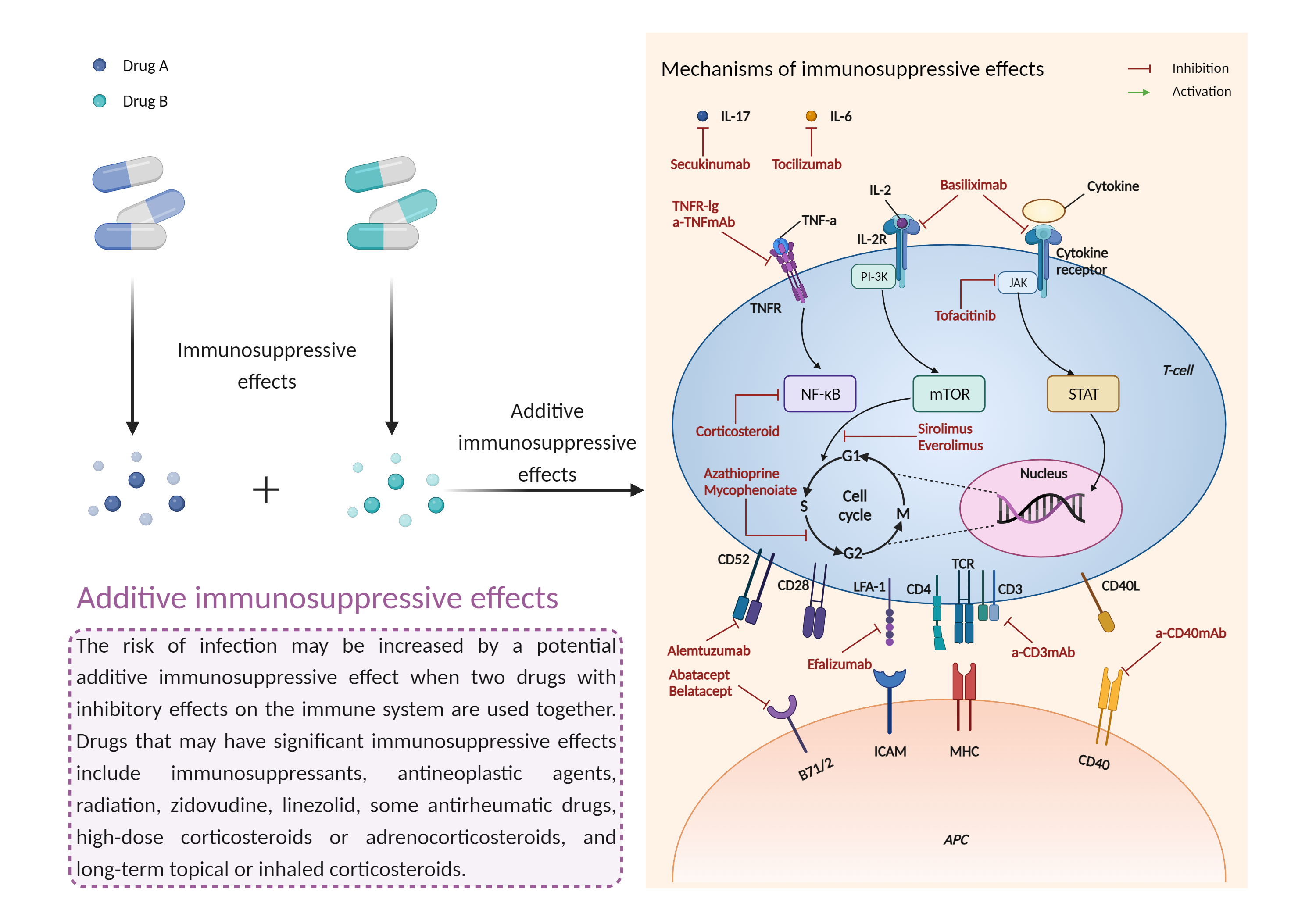
| Additive immunosuppressive effects Click to Show/Hide Mechanism Graph | |||||||||
 |
|||||||||
| Drug Name | Cisplatin | Paclitaxel (protein-bound) | |||||||
| Mechanism 1 | Myelosuppressive effects | Myelosuppressive effects | |||||||
| Key Mechanism Factor 1 | |||||||||
| Factor Name | Immunosuppressive effects | ||||||||
| Factor Description | Immunosuppression is when your immune system is not functioning as it should. The immune system is made up of cells, tissues and organs that help the body fight off infections. If the immune system is suppressed, an infection that your body was able to control may become serious or even fatal. | ||||||||
| Mechanism Description |
|
||||||||
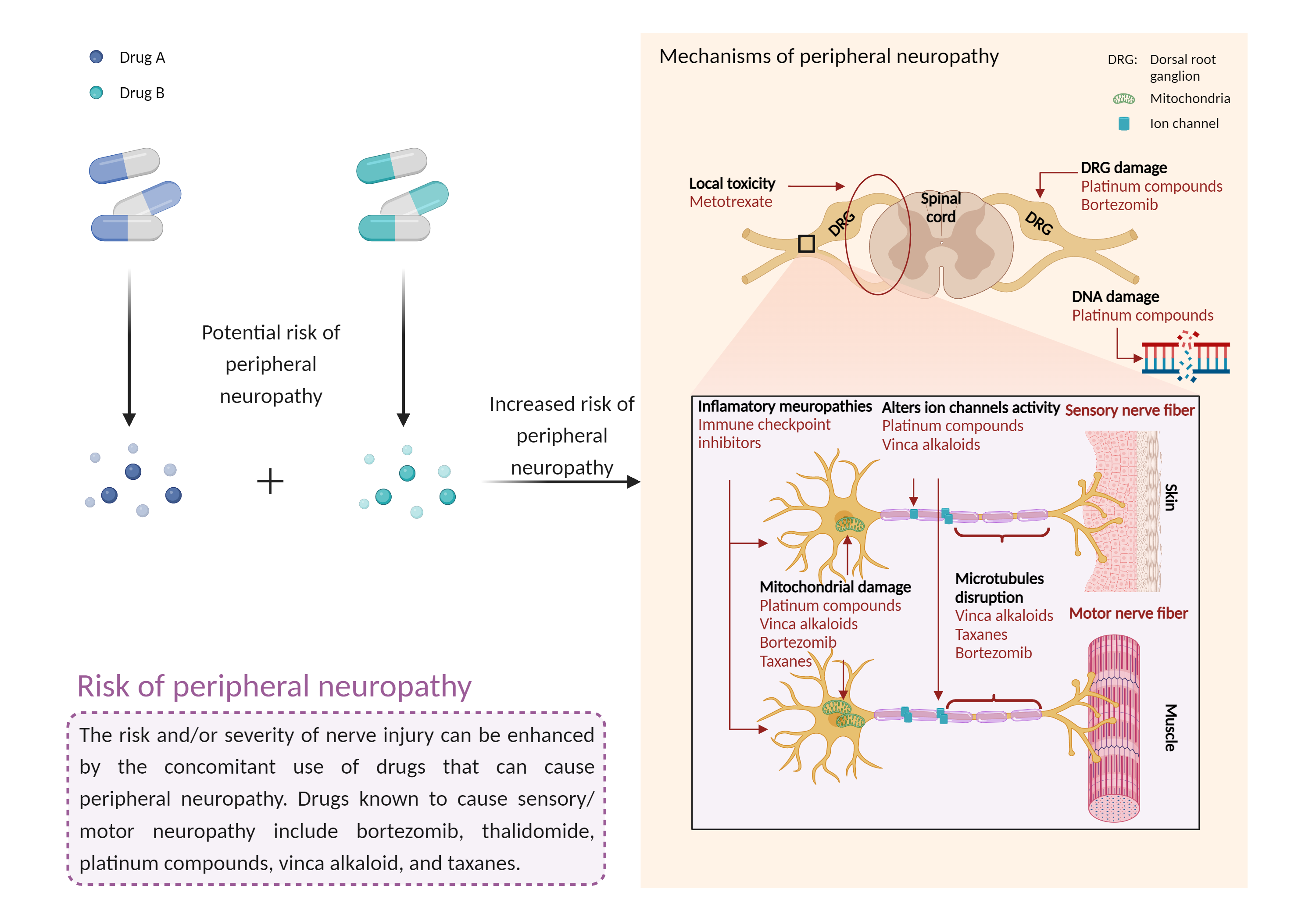
| Increased risk of peripheral neuropathy Click to Show/Hide Mechanism Graph | |||||||||
 |
|||||||||
| Drug Name | Cisplatin | Paclitaxel (protein-bound) | |||||||
| Mechanism 2 | Peripheral neuropathy | Peripheral neuropathy | |||||||
| Key Mechanism Factor 2 | |||||||||
| Factor Name | Peripheral neuropathy | ||||||||
| Factor Description | Peripheral neuropathy is a disorder of the peripheral nerves that can cause sensory and motor symptoms, and even paralysis in severe cases. Signs and symptoms of peripheral neuropathy may include: gradual numbness, tingling or prickling in the feet or hands that can spread up the legs and arms; sharp, stinging, pricking or burning sensations; extreme sensitivity to touch; pain during activities that should not cause pain; lack of coordination and falls; muscle weakness; and paralysis if the motor nerves are affected. | ||||||||
| Mechanism Description |
|
||||||||
| Recommended Action | |||||||||
|---|---|---|---|---|---|---|---|---|---|
| Management | Paclitaxel should be given before cisplatin when used in combination. Peripheral blood cell counts and neurologic examination should be performed regularly, and patients should be advised to contact their physician if they develop signs and symptoms of myelosuppression such as pallor, dizziness, fatigue, lethargy, fainting, easy bruising or bleeding, or signs of infection such as fever, chills, sore throat, body aches, and other influenza-like symptoms. Patients should also seek medical attention if they experience signs and symptoms of neuropathy such as visual disturbances and burning, tingling, pain, or numbness in the hands and feet. Consideration should be given to dosage reductions or immediate discontinuation of these medications in patients who develop severe myelosuppression or peripheral neuropathy. | ||||||||