
Details of Drug-Drug Interaction
| Drug General Information (ID: DDI6GRC21A) | |||||||||
|---|---|---|---|---|---|---|---|---|---|
| Drug Name | Polyethylene glycol (3350) | Drug Info | Frangula purshiana bark | Drug Info | |||||
| Drug Type | Small molecule | Natural product | |||||||
| Therapeutic Class | Laxatives | Herbal Products | |||||||
| Mechanism of Polyethylene glycol (3350)-Frangula purshiana bark Interaction (Severity Level: Moderate) | |||||||||
|---|---|---|---|---|---|---|---|---|---|
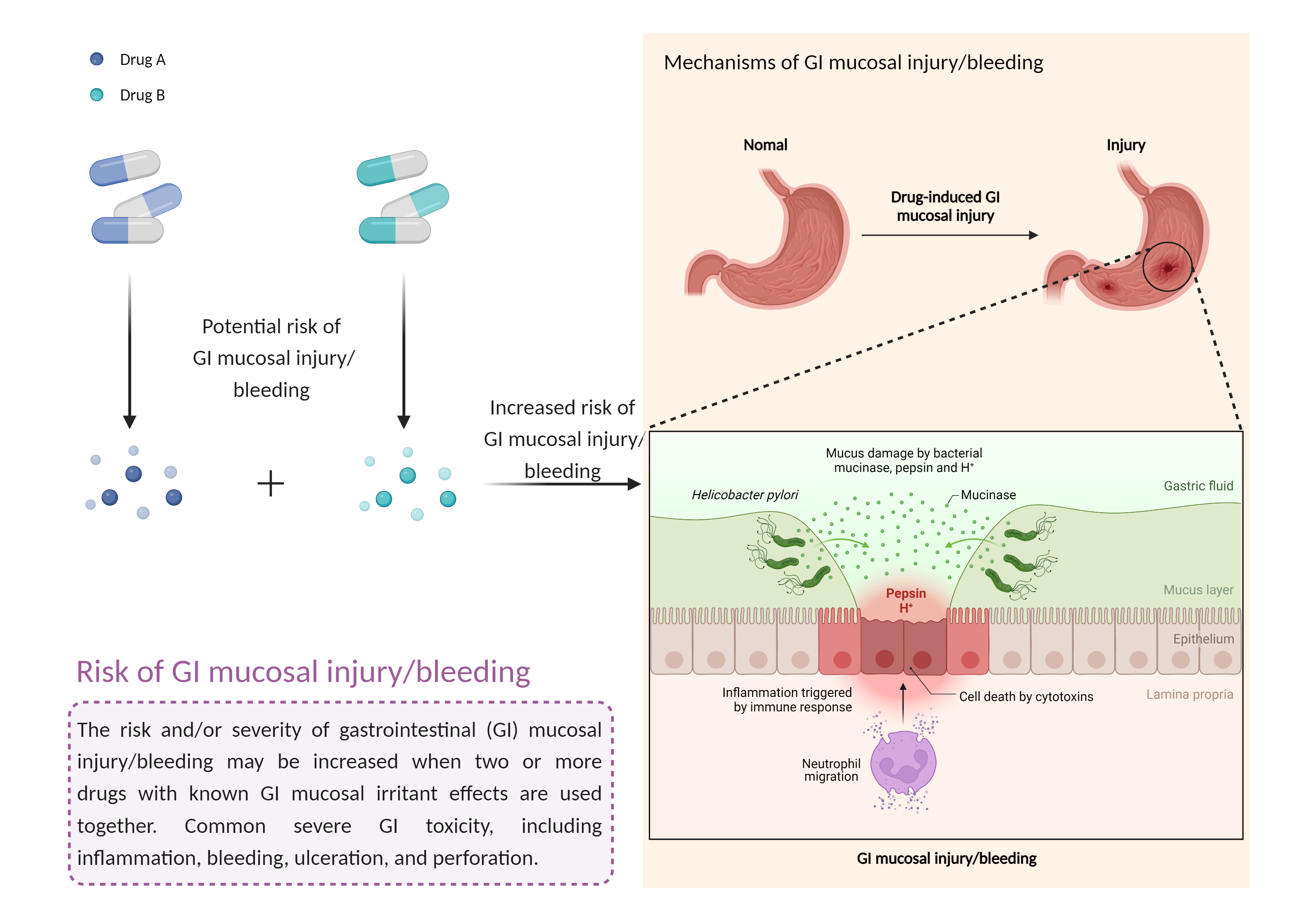
| Increased risk of GI mucosal injury/bleeding risk Click to Show/Hide Mechanism Graph | |||||||||
 |
|||||||||
| Drug Name | Polyethylene glycol (3350) | Frangula purshiana bark | |||||||
| Mechanism | Increase the risk of colonic mucosal ulceration or ischemic colitis combined with stimulant laxative | Stimulant laxative | |||||||
| Key Mechanism Factor 1 | |||||||||
| Factor Name | Gastrointestinal toxicity | ||||||||
| Factor Description | The risk and severity of gastrointestinal toxicity, including inflammation, bleeding, ulceration, and perforation, increases when drugs with gastrointestinal mucosal irritant effects are combined. | ||||||||
| Mechanism Description |
|
||||||||
| Recommended Action | |||||||||
|---|---|---|---|---|---|---|---|---|---|
| Management | The manufacturers for some osmotic bowel cleansing products recommend avoiding the concurrent use of stimulant laxatives. However, stimulant laxatives, in particular bisacodyl and sodium picosulfate, are sometimes used with PEG in certain bowel cleansing regimens to help reduce dose volume and improve patient tolerability and acceptance. Please consult individual product labeling for specific recommendations and guidance. Patients using osmotic bowel cleansing products and stimulant laxatives who present with sudden abdominal pain, rectal bleeding, or other symptoms of ischemic colitis should be evaluated promptly. | ||||||||