
Details of Drug-Drug Interaction
| Drug General Information (ID: DDI5XKUIFZ) | |||||||||
|---|---|---|---|---|---|---|---|---|---|
| Drug Name | Methotrexate | Drug Info | Cytarabine | Drug Info | |||||
| Drug Type | Small molecule | Small molecule | |||||||
| Therapeutic Class | Antimetabolites | Antineoplastics | |||||||
| Structure | |||||||||
| Mechanism of Methotrexate-Cytarabine Interaction (Severity Level: Moderate) | |||||||||
|---|---|---|---|---|---|---|---|---|---|
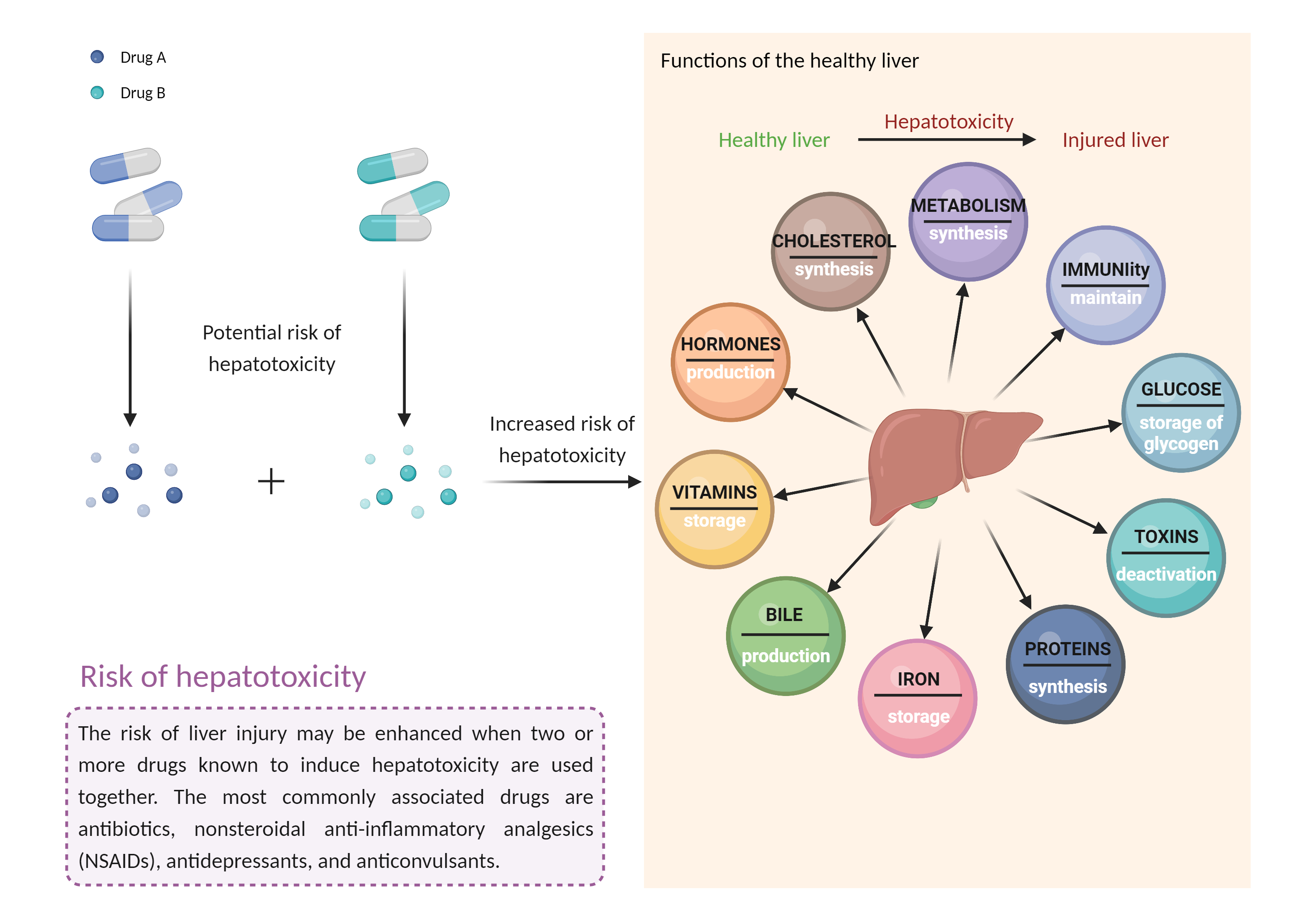
| Increased risk of hepatotoxicity Click to Show/Hide Mechanism Graph | |||||||||
 |
|||||||||
| Drug Name | Methotrexate | Cytarabine | |||||||
| Mechanism | Hepatotoxicity | Hepatotoxicity | |||||||
| Key Mechanism Factor 1 | |||||||||
| Factor Name | Hepatotoxicity | ||||||||
| Factor Description | Combination of drugs that can induce hepatotoxicity may increase the risk of liver injury. Symptoms vary depending on the level of exposure and the total extent of liver damage, and may cause few symptoms if the damage is mild, and eventually lead to liver failure in patients with severe damage. | ||||||||
| Mechanism Description |
|
||||||||
| Recommended Action | |||||||||
|---|---|---|---|---|---|---|---|---|---|
| Management | The use of methotrexate with other potentially hepatotoxic agents, such as cytarabine, should be avoided whenever possible. Patients should be advised to seek medical attention if they experience potential signs and symptoms of hepatotoxicity such as fever, rash, itching, anorexia, nausea, vomiting, fatigue, right upper quadrant pain, dark urine, pale stools, and jaundice. Baseline and regular monitoring of hepatic function is recommended. In addition, caution is advised whenever IV cytarabine is administered with intrathecal methotrexate. Patients should be monitored for signs of neurological adverse effects such as headache, mental status changes, numbness, and paralysis. | ||||||||