
Details of Drug-Drug Interaction
| Drug General Information (ID: DDI5EUY2VB) | |||||||||
|---|---|---|---|---|---|---|---|---|---|
| Drug Name | Magnesium chloride | Drug Info | Magnesium citrate | Drug Info | |||||
| Drug Type | Small molecule | Small molecule | |||||||
| Therapeutic Class | Minerals And Electrolytes | Minerals And Electrolytes | |||||||
| Structure | |||||||||
| Mechanism of Magnesium chloride-Magnesium citrate Interaction (Severity Level: Moderate) | |||||||||
|---|---|---|---|---|---|---|---|---|---|
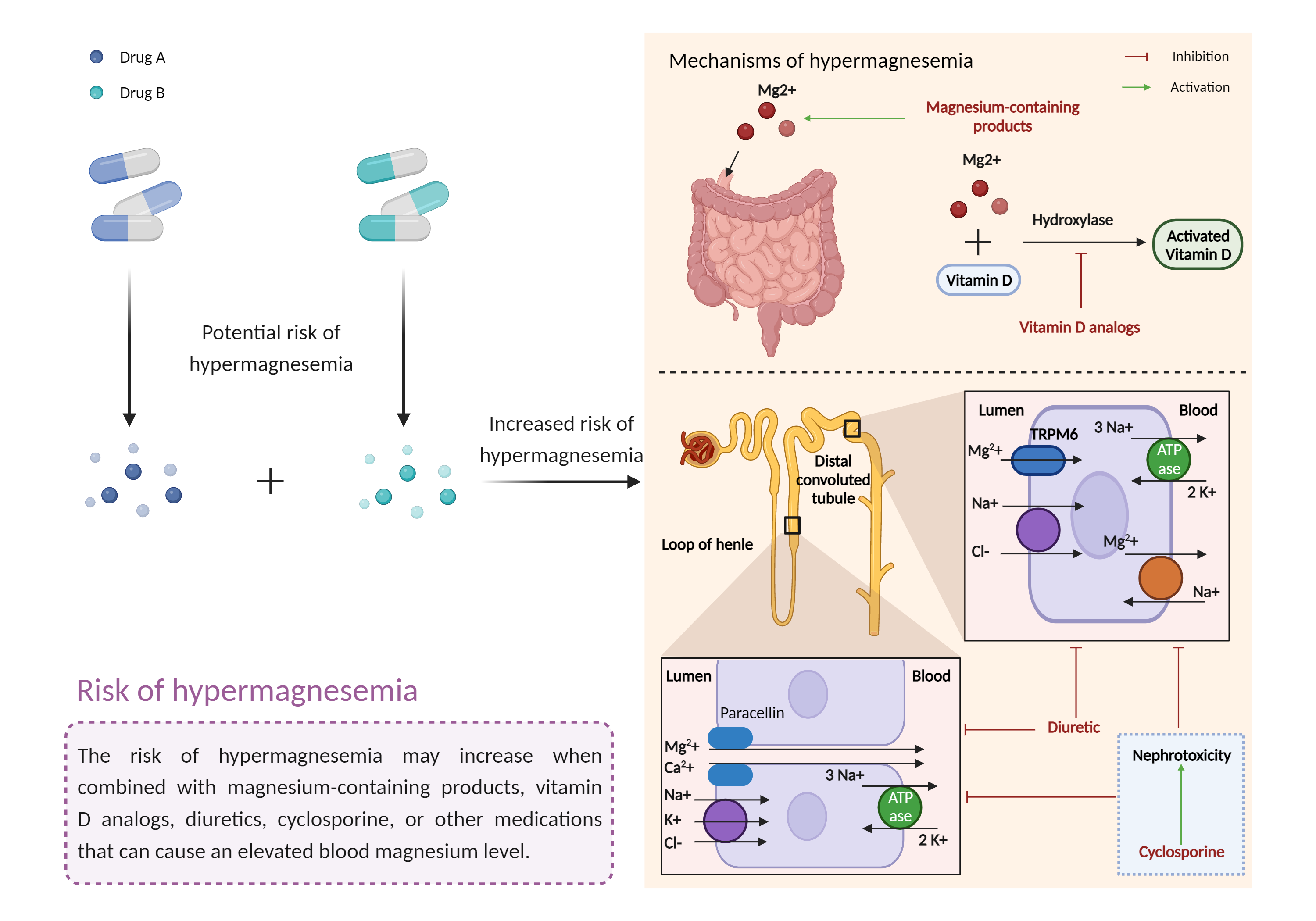
| Increased risk of hypermagnesemia Click to Show/Hide Mechanism Graph | |||||||||
 |
|||||||||
| Drug Name | Magnesium chloride | Magnesium citrate | |||||||
| Mechanism | Hypermagnesemia | Hypermagnesemia | |||||||
| Key Mechanism Factor 1 | |||||||||
| Factor Name | Hypermagnesemia | ||||||||
| Factor Description | Hypomagnesemia is a condition that occurs when you have too much magnesium in your body. Symptoms of hypomagnesemia include: nausea, vomiting, neurological damage, abnormally low blood pressure (hypotension), flushing, and headaches. | ||||||||
| Mechanism Description |
|
||||||||
| Recommended Action | |||||||||
|---|---|---|---|---|---|---|---|---|---|
| Management | Clinical and laboratory monitoring for signs of hypermagnesemia and magnesium toxicity is advisable, especially in high-risk patients (e.g., elderly or renally impaired patients). | ||||||||
| References | |||||||||||||||||||
|---|---|---|---|---|---|---|---|---|---|---|---|---|---|---|---|---|---|---|---|
| 1 | Cerner Multum, Inc. "UK Summary of Product Characteristics.". | ||||||||||||||||||