| Mechanism of Oxycodone-Bismuth subgallate Interaction
(Severity Level: Moderate)
|
|
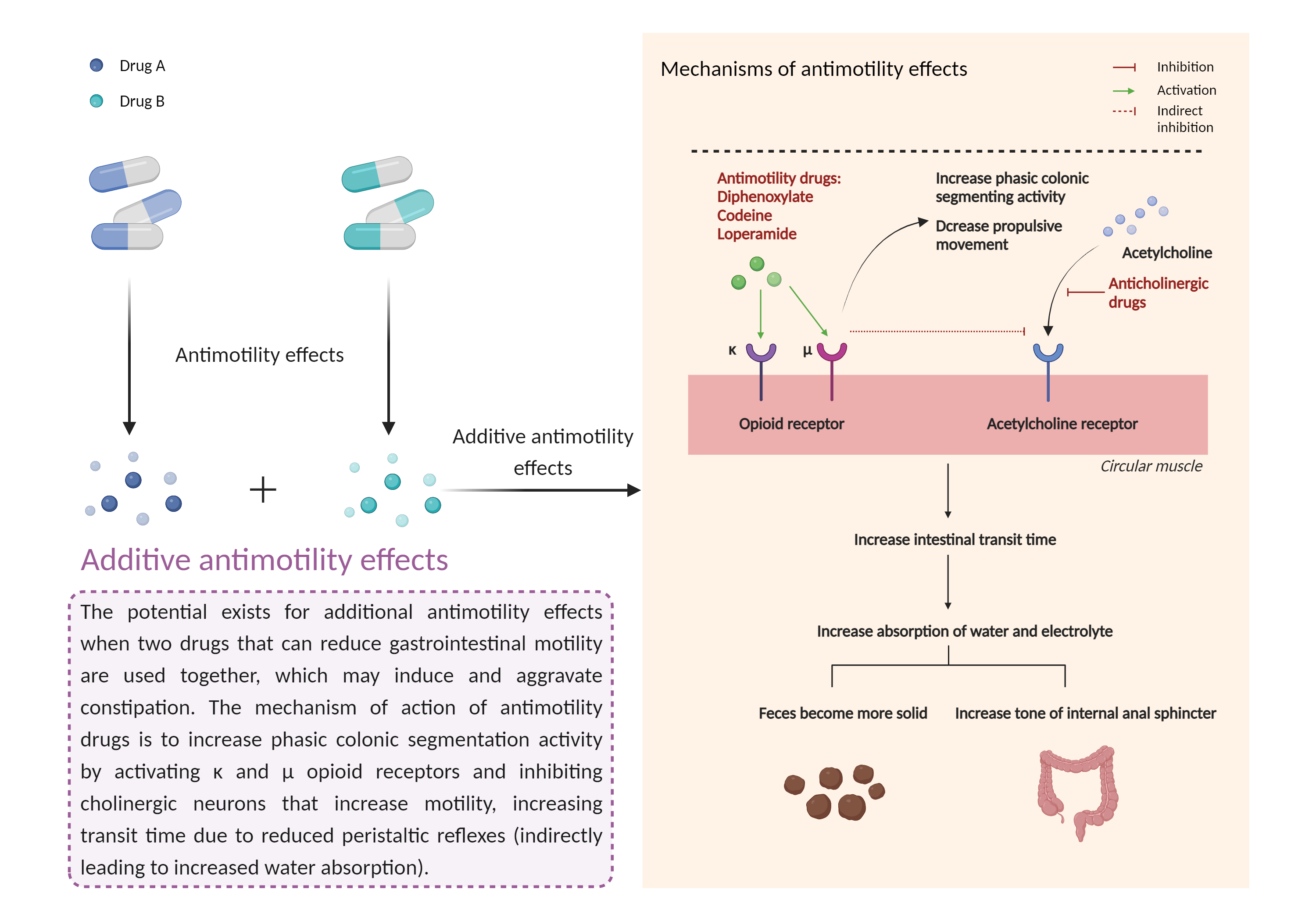
Additive antimotility effects
Click to Show/Hide Mechanism Graph
|
 |
| Drug Name |
Oxycodone |
Bismuth subgallate |
|
Mechanism 1
|
Decrease gastrointestinal motility |
Antidiarrheal agents |
| Key Mechanism Factor 1 |
| Factor Name |
Antimotility effects |
| Factor Description |
Antimotility drugs reduce bowel movements and increase contractions of intestinal segments for treatment of acute diarrhea. Excessive inhibition of intestinal motility can cause bloating and flatulence, increase abdominal cramps, and cause constipation at various times after treatment. |
| Mechanism Description |
- Additive antimotility effects by the combination of Oxycodone and Bismuth subgallate
|
|
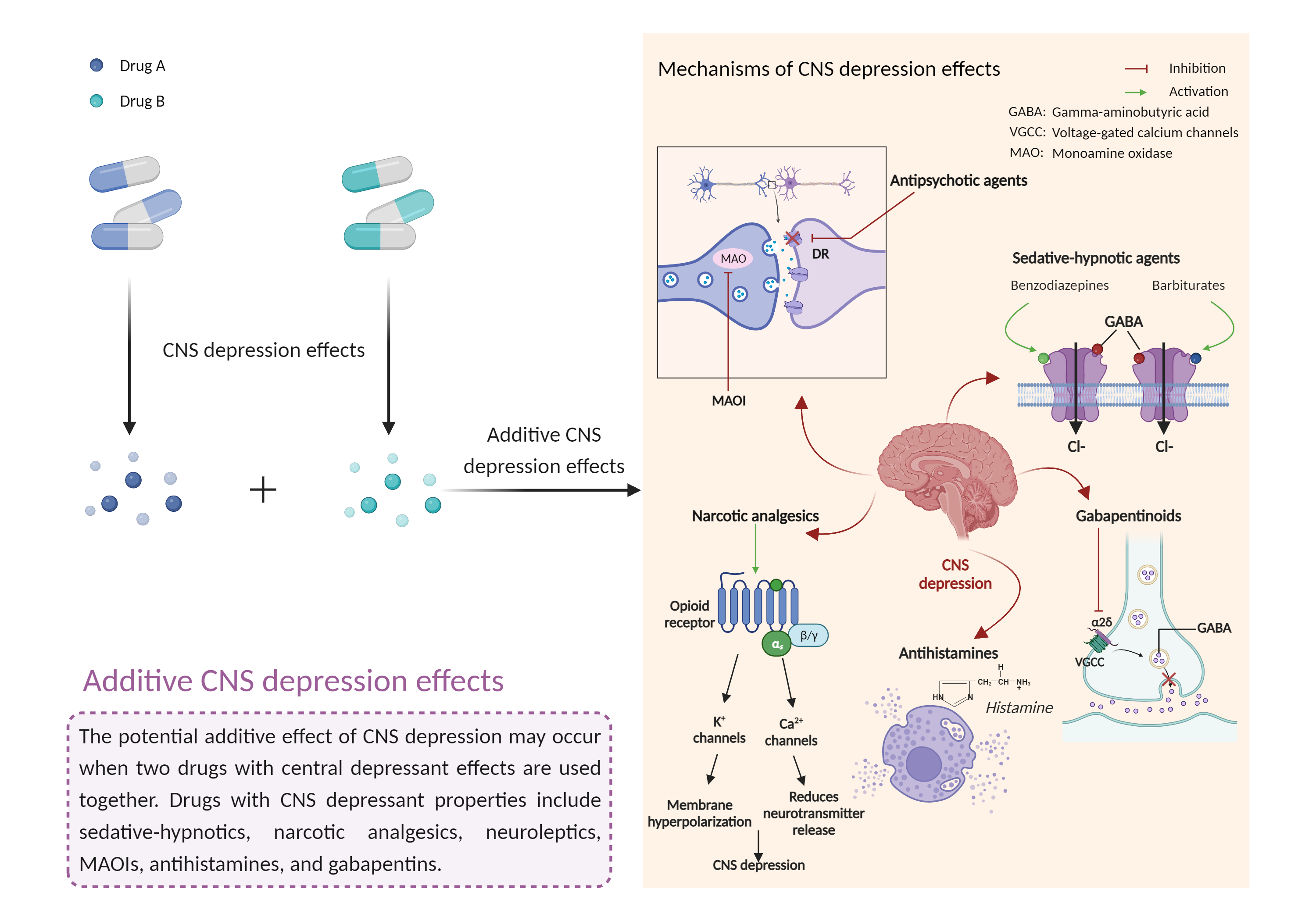
Additive CNS depression effects
Click to Show/Hide Mechanism Graph
|
 |
| Drug Name |
Oxycodone |
Bismuth subgallate |
|
Mechanism 2
|
CNS depression effects |
CNS depression effects |
| Key Mechanism Factor 2 |
| Factor Name |
CNS depression effects |
| Factor Description |
CNS depressants are drugs that inhibit or suppress brain activity and can reduce mental and physical processes. Excessive CNS depression can lead to decreased heart rate, slow breathing (less than 10 breaths per minute), extreme confusion or loss of memory, nausea and vomiting, poor judgment, blue lips or fingertips, irritability and aggression, and clammy or cold skin. |
| Mechanism Description |
- Additive CNS depression effects by the combination of Oxycodone and Bismuth subgallate
|
