
Details of Drug-Drug Interaction
| Drug General Information (ID: DDI2NZY7A1) | |||||||||
|---|---|---|---|---|---|---|---|---|---|
| Drug Name | Procainamide | Drug Info | Amiodarone | Drug Info | |||||
| Drug Type | Small molecule | Small molecule | |||||||
| Therapeutic Class | Antiarrhythmic Agents | Antiarrhythmic Agents | |||||||
| Structure | |||||||||
| Mechanism of Procainamide-Amiodarone Interaction (Severity Level: Major) | |||||||||
|---|---|---|---|---|---|---|---|---|---|
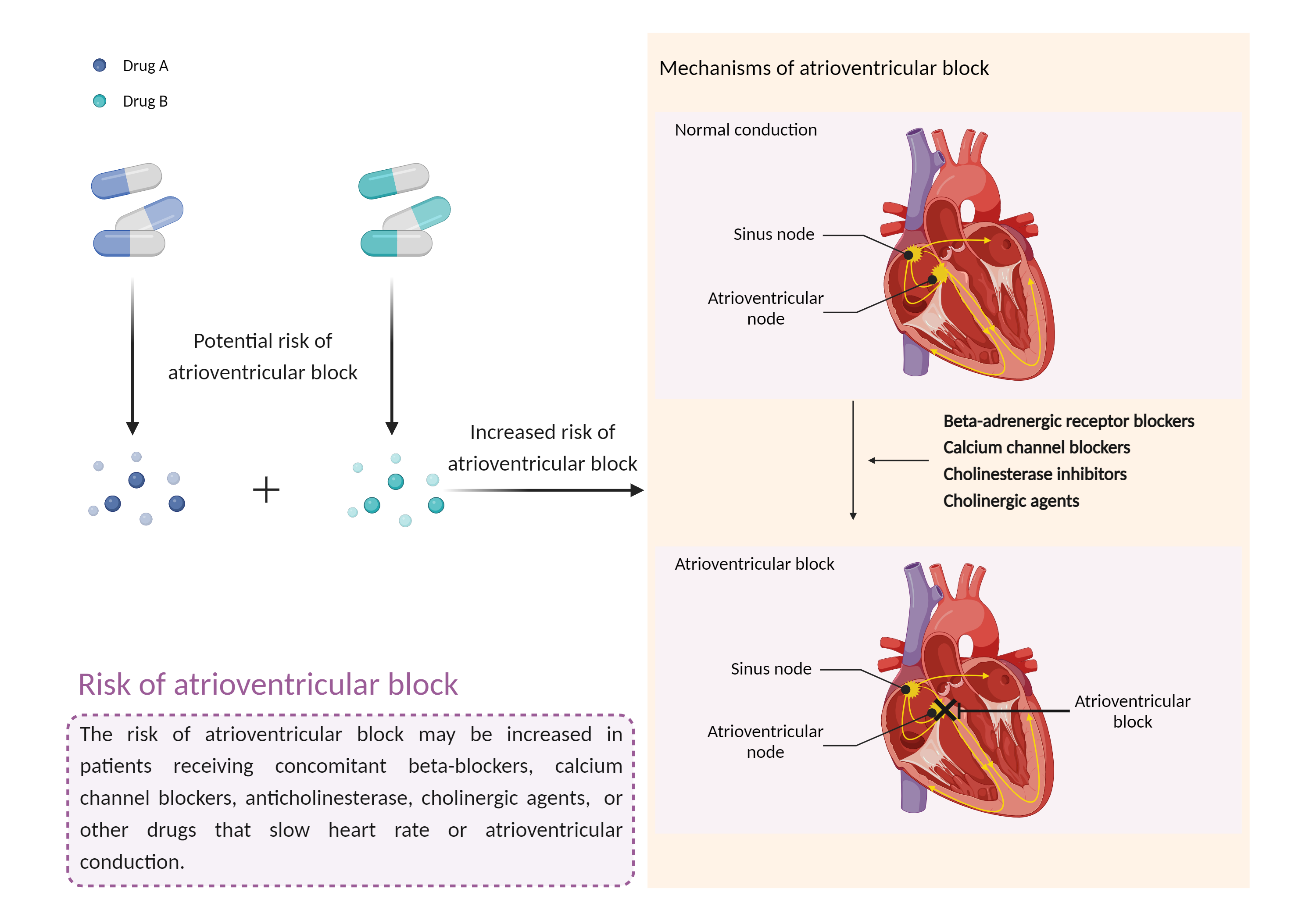
| Increased risk of atrioventricular block Click to Show/Hide Mechanism Graph | |||||||||
 |
|||||||||
| Drug Name | Procainamide | Amiodarone | |||||||
| Mechanism 1 | Delay atrioventricular conduction | Delay atrioventricular conduction | |||||||
| Key Mechanism Factor 1 | |||||||||
| Factor Name | Atrioventricular block | ||||||||
| Factor Description | Atrioventricular block is a type of cardiac conduction block that occurs when the electrical signal from the atria to the ventricles is impaired. In an Atrioventricular block, this electrical signal is either delayed or completely blocked. When the signal is completely blocked, the ventricles produce their own electrical signal to control the heart rate. The heart rate produced by the ventricles is much slower than that produced by the sinus node. | ||||||||
| Mechanism Description |
|
||||||||
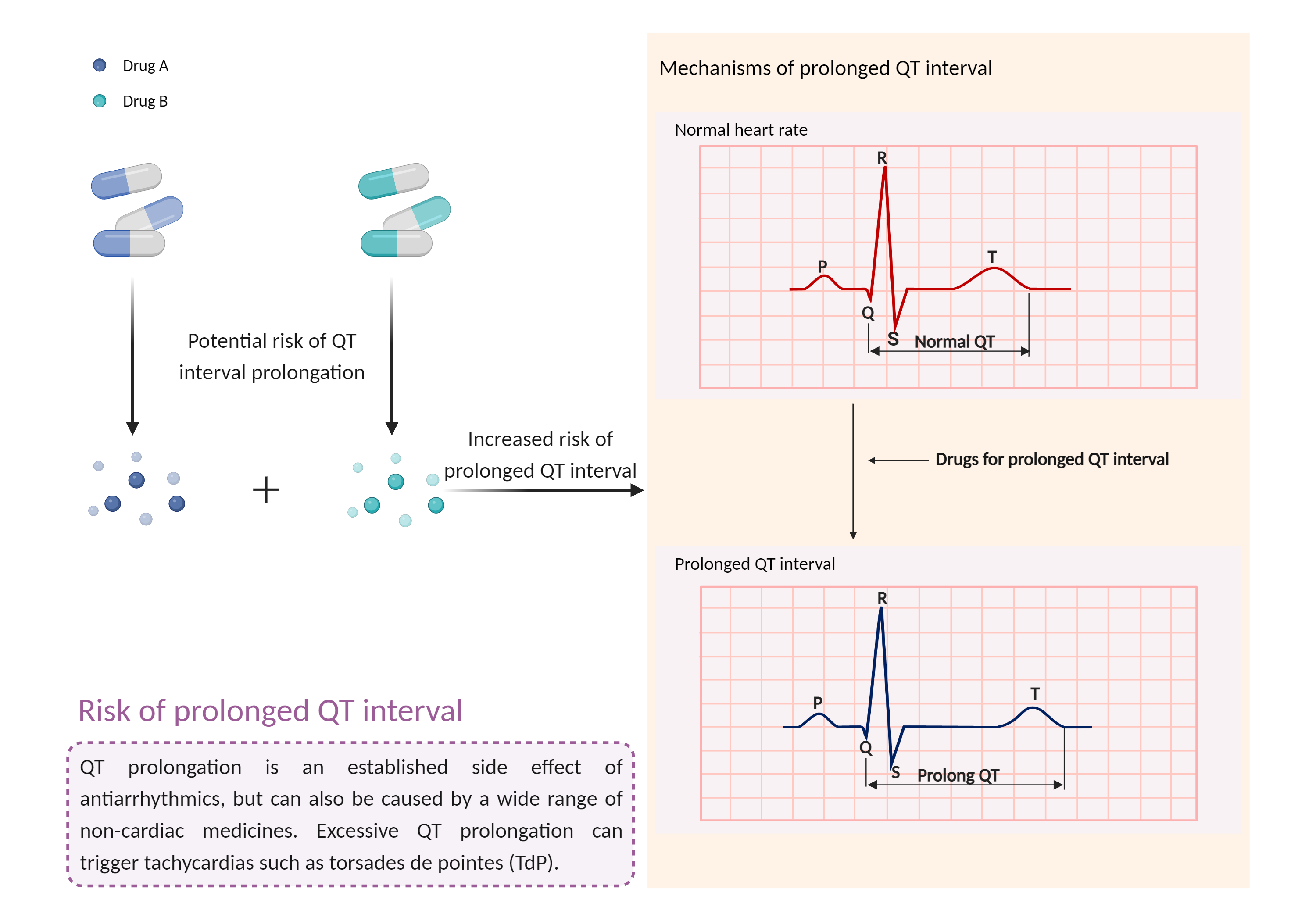
| Increased risk of prolong QT interval Click to Show/Hide Mechanism Graph | |||||||||
 |
|||||||||
| Drug Name | Procainamide | Amiodarone | |||||||
| Mechanism 2 | Prolong QT interval | Prolong QT interval | |||||||
| Key Mechanism Factor 2 | |||||||||
| Factor Name | QT interval | ||||||||
| Factor Description | Long QT syndrome is a heart signaling disorder that can cause a fast, chaotic heartbeat (arrhythmia). Many people may not exhibit symptoms, and usually the condition is detected during routine medical tests. In others, the most common symptoms include: sudden fainting, palpitations, dizziness, seizures, sudden death. | ||||||||
| Mechanism Description |
|
||||||||
| Recommended Action | |||||||||
|---|---|---|---|---|---|---|---|---|---|
| Management | The concurrent use of amiodarone with other antiarrhythmic agents, including procainamide, should be reserved for patients with life-threatening ventricular arrhythmias who are incompletely responsive to a single agent or to amiodarone alone. A dosage reduction for procainamide is recommended during coadministration. In general, if adding or transferring to oral amiodarone, the dosages of previously administered agents should be reduced by 30% to 50% several days after initiation of amiodarone, when onset of arrhythmia suppression is expected to occur. The continued need for other antiarrhythmic agents should be evaluated after the effects of amiodarone have been established, and discontinuation should ordinarily be attempted. If the combination is continued, patients should be monitored closely for adverse effects including conduction disturbances and exacerbation of tachyarrhythmias. Conversely, in amiodarone-treated patients who require additional antiarrhythmic agents, the initial dosage of such agents should be approximately one-half the usual recommended dosage. All patients should be advised to seek medical attention if they experience symptoms that could indicate the occurrence of torsade de pointes such as dizziness, lightheadedness, fainting, palpitations, irregular heartbeat, shortness of breath, or syncope. | ||||||||