Drug General Information (ID: DDI296YV5X)
  Drug Name Digitoxin Drug Info Fingolimod Drug Info
  Drug Type Small molecule Small molecule
  Therapeutic Class Antiarrhythmic Agents Selective Immunosuppressants
  Structure

 Mechanism of Digitoxin-Fingolimod Interaction (Severity Level: Major)
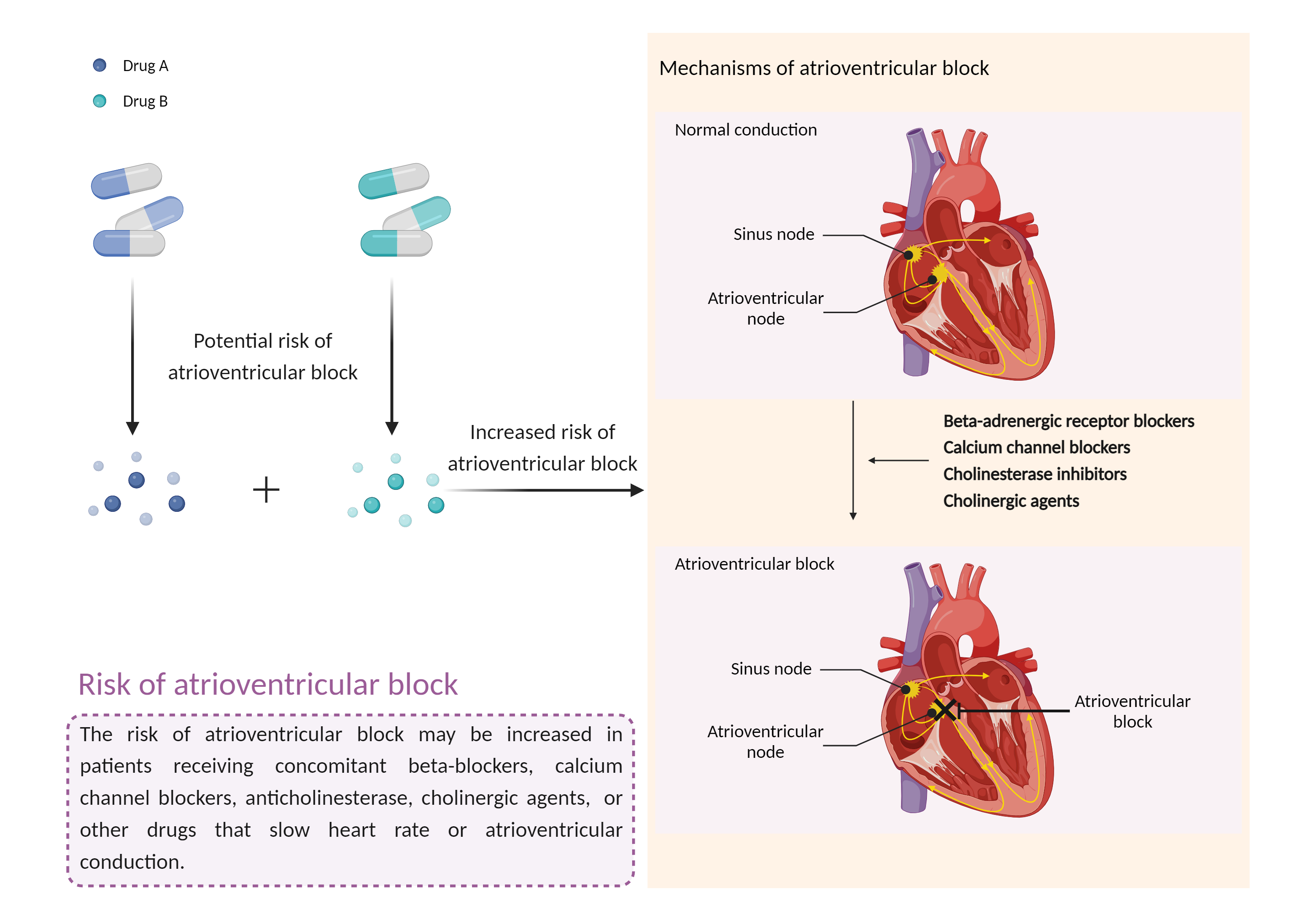
     Increased risk of atrioventricular block Click to Show/Hide Mechanism Graph
Could Not Find 2D Structure
      Drug Name Digitoxin Fingolimod
      Mechanism 1 Delay atrioventricular conduction Delay atrioventricular conduction
      Key Mechanism Factor 1
Factor Name Atrioventricular block
Factor Description Atrioventricular block is a type of cardiac conduction block that occurs when the electrical signal from the atria to the ventricles is impaired. In an Atrioventricular block, this electrical signal is either delayed or completely blocked. When the signal is completely blocked, the ventricles produce their own electrical signal to control the heart rate. The heart rate produced by the ventricles is much slower than that produced by the sinus node.
      Mechanism Description
  • Increased risk of atrioventricular block by the combination of Digitoxin and Fingolimod 
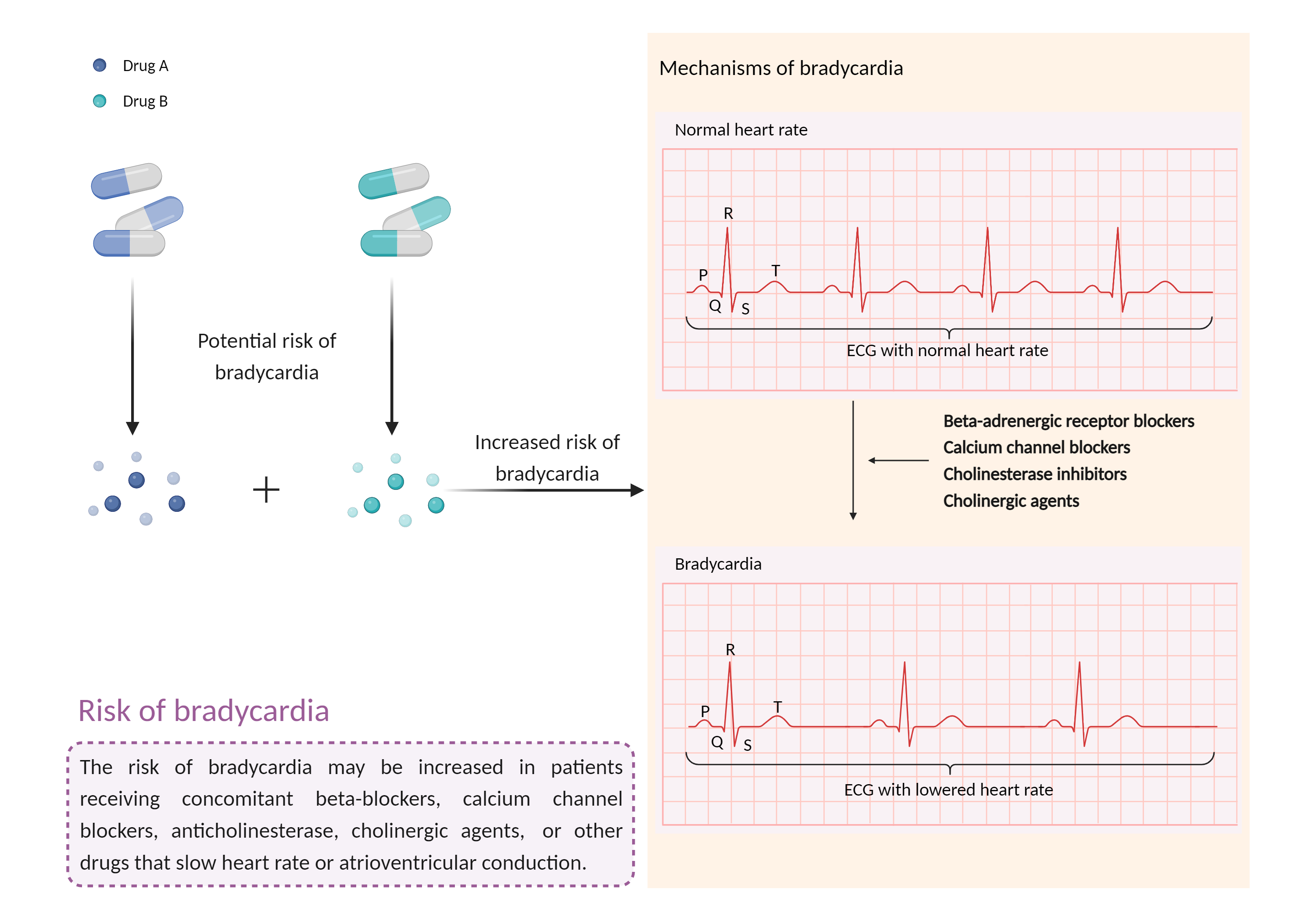
     Increased risk of bradycardia Click to Show/Hide Mechanism Graph
Could Not Find 2D Structure
      Drug Name Digitoxin Fingolimod
      Mechanism 2 Bradycardia Bradycardia
      Key Mechanism Factor 2
Factor Name Bradycardia
Factor Description Bradycardia is a slow heart rate in which the heart beats less than 60 times per minute. If the heart rate is very slow and the heart is not pumping enough oxygen-rich blood to the body, and you may feel dizzy, very tired or weak, and short of breath.
      Mechanism Description
  • Increased risk of bradycardia by the combination of Digitoxin and Fingolimod 

Recommended Action
      Management Fingolimod has not been adequately studied in patients receiving beta-blockers, calcium channel blockers, or digitalis. The possibility of switching to alternative agents that do not slow heart rate or AV conduction should be evaluated by the physician before initiating fingolimod. In patients who cannot switch, overnight continuous ECG monitoring after the first dose is recommended in accordance with the product labeling. The same precautions are applicable if, after the first month of treatment, fingolimod is discontinued for more than two weeks and then restarted, since the effects on heart rate and AV conduction may recur on reintroduction of fingolimod. Within the first 2 weeks of treatment, first-dose procedures are also recommended after interruption of one day or more during week 3 and 4 of treatment, first-dose procedures are recommended after treatment interruption of more than 7 days. The first dose should always be administered in a setting where resources to appropriately manage symptomatic bradycardia are available.

References
1 Product Information. Gilenya (fingolimod). Novartis Pharmaceuticals, East Hanover, NJ.
2 FDA. U.S. Food and Drug Administration "FDA Drug Safety Communication: Revised recommendations for cardiovascular monitoring and use of multiple sclerosis drug Gilenya (fingolimod).".