
Details of Drug-Drug Interaction
| Drug General Information (ID: DDI1ZXMO2T) | |||||||||
|---|---|---|---|---|---|---|---|---|---|
| Drug Name | Carteolol (ophthalmic) | Drug Info | Fluorescein | Drug Info | |||||
| Drug Type | Small molecule | Small molecule | |||||||
| Therapeutic Class | Antihypertensive Agents | Diagnostic Agents | |||||||
| Structure | |||||||||
| Mechanism of Carteolol (ophthalmic)-Fluorescein Interaction (Severity Level: Moderate) | |||||||||
|---|---|---|---|---|---|---|---|---|---|
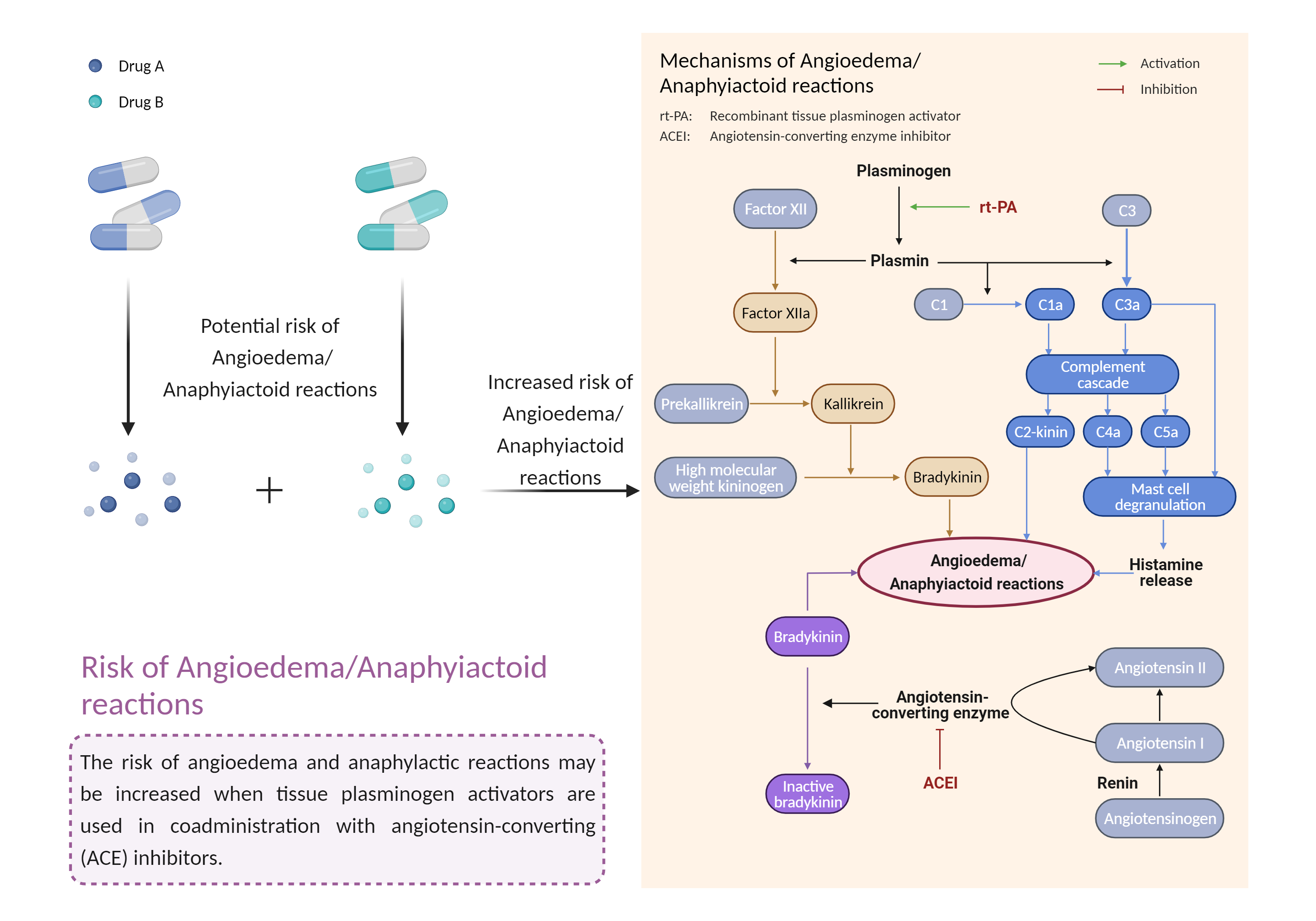
| Increased risk of angioedema/anaphylactoid reactions Click to Show/Hide Mechanism Graph | |||||||||
 |
|||||||||
| Drug Name | Carteolol (ophthalmic) | Fluorescein | |||||||
| Mechanism | Anaphylactoid reactions | Anaphylactoid reactions | |||||||
| Key Mechanism Factor 1 | |||||||||
| Factor Name | Angioedema/anaphylactoid reactions | ||||||||
| Factor Description | Anaphylactoid reaction is a condition in which symptoms similar to an allergic reaction occur, but no immune sensitization is detected. Most commonly, the syndrome begins with skin involvement, usually pruritus, flushing, urticaria, or angioedema. Angioedema is a reaction to a trigger that causes swelling of the tissue below the inner layer of the skin, called the dermis or submucosa, and the swelling can occur on the face, throat, or around the genitals. | ||||||||
| Mechanism Description |
|
||||||||
| Recommended Action | |||||||||
|---|---|---|---|---|---|---|---|---|---|
| Management | Patients should be closely monitored for signs of severe, acute hypersensitivity reactions during fluorescein injection, and facilities and equipment for resuscitation, cardiovascular support, and airway management should be immediately available. Clinicians should be aware that larger doses of epinephrine or other adrenergic agents may be required. | ||||||||