Drug General Information (ID: DDI1IYX3AL)
  Drug Name Buspirone Drug Info Remifentanil Drug Info
  Drug Type Small molecule Small molecule
  Therapeutic Class Antianxiety Agents Anxiolytics/Sedatives/Hypnotics
  Structure

 Mechanism of Buspirone-Remifentanil Interaction (Severity Level: Major)
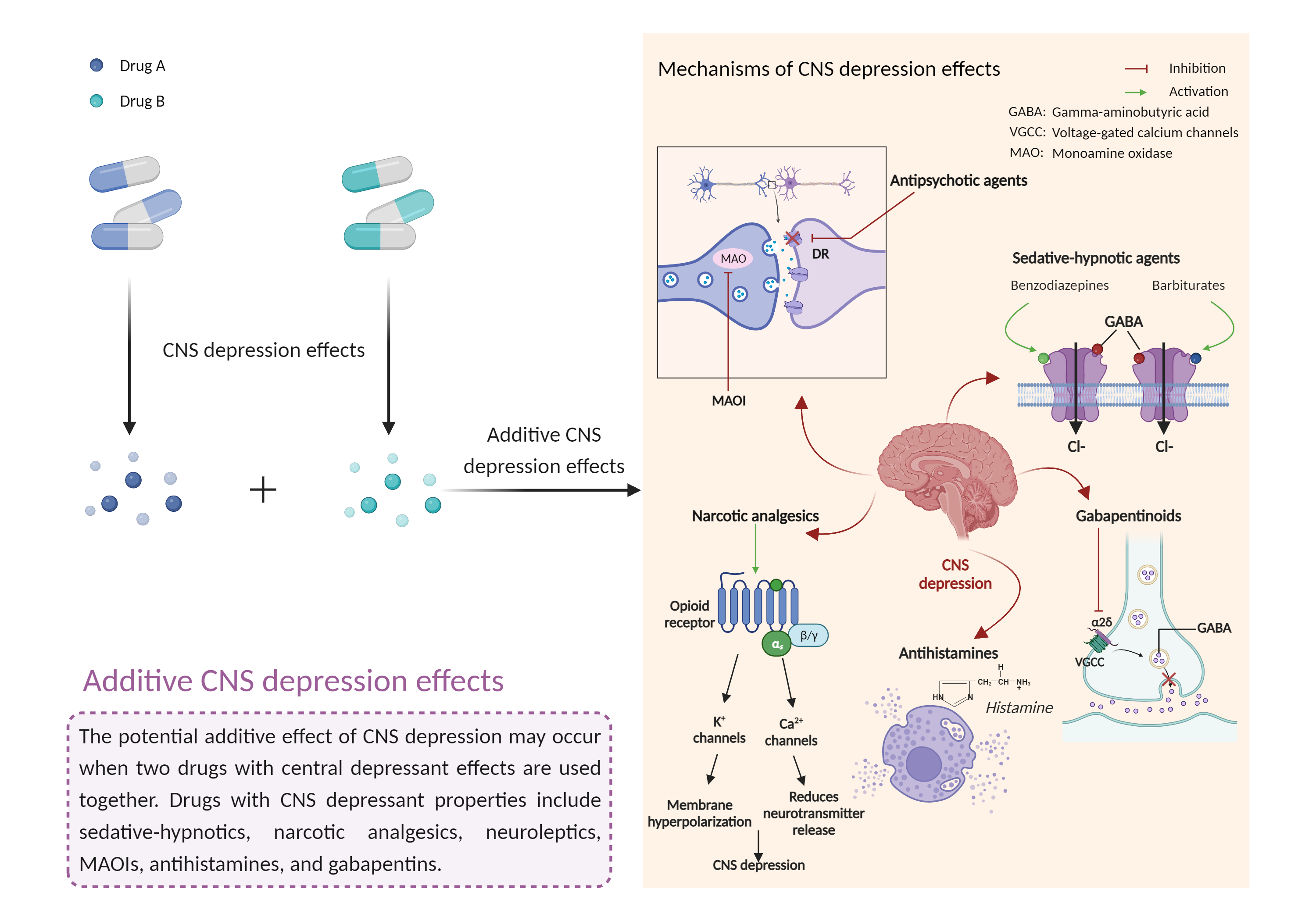
     Additive CNS depression effects Click to Show/Hide Mechanism Graph
Could Not Find 2D Structure
      Drug Name Buspirone Remifentanil
      Mechanism 1 CNS depression effects CNS depression effects
      Key Mechanism Factor 1
Factor Name CNS depression effects
Factor Description CNS depressants are drugs that inhibit or suppress brain activity and can reduce mental and physical processes. Excessive CNS depression can lead to decreased heart rate, slow breathing (less than 10 breaths per minute), extreme confusion or loss of memory, nausea and vomiting, poor judgment, blue lips or fingertips, irritability and aggression, and clammy or cold skin.
      Mechanism Description
  • Additive CNS depression effects by the combination of Buspirone and Remifentanil 
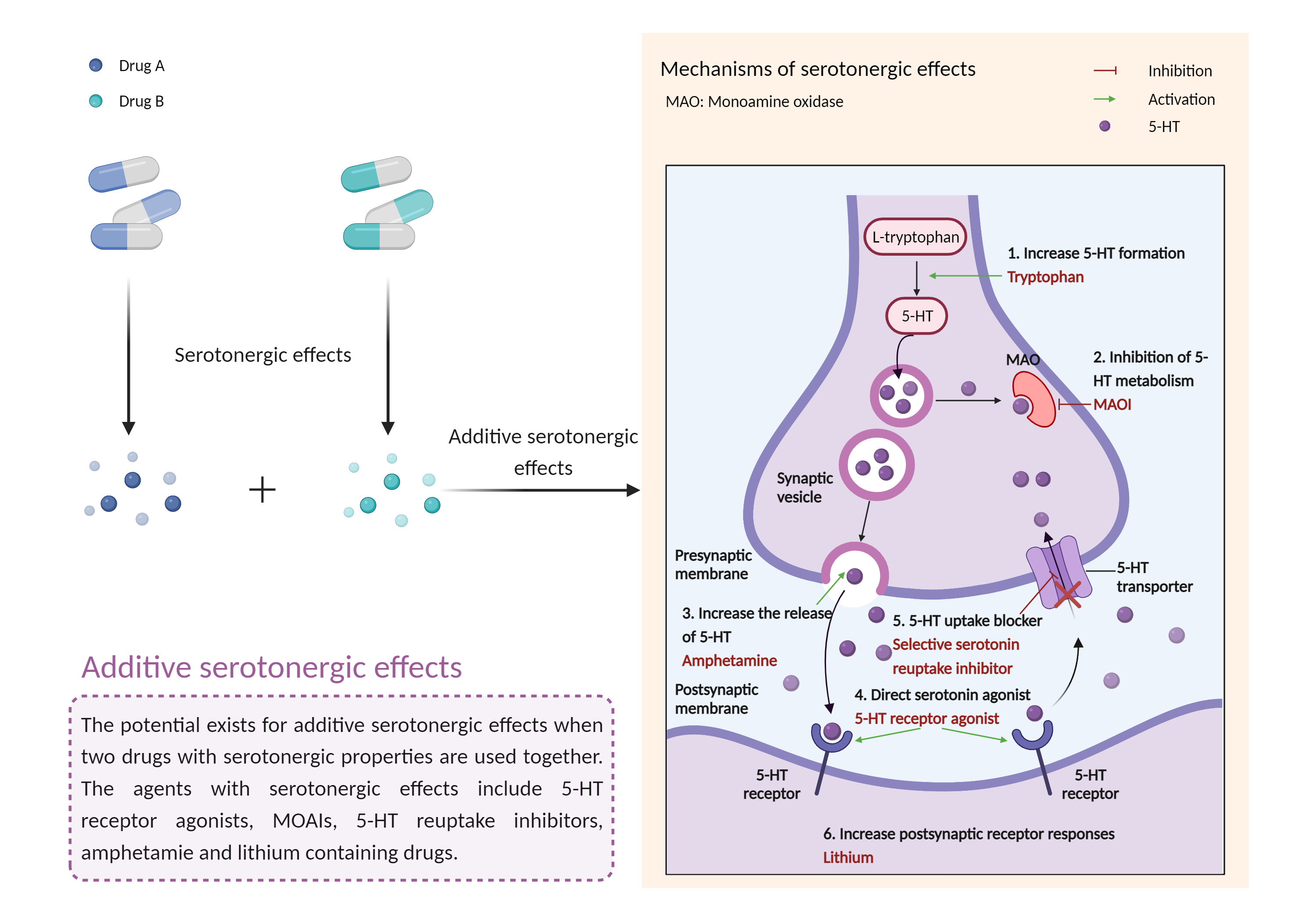
     Additive serotonergic effects Click to Show/Hide Mechanism Graph
Could Not Find 2D Structure
      Drug Name Buspirone Remifentanil
      Mechanism 2 Serotonergic effects Serotonergic effects
      Key Mechanism Factor 2
Factor Name Serotonergic effects
Factor Description Serotonergic drugs include a variety of drugs that enhance or mimic the effects of the neurotransmitter serotonin. Excessive serotonergic activation may lead to a condition known as serotonin syndrome, in which high levels of serotonin in the brain cause the following symptoms: changes in blood pressure, coma, fever, increased heart rate, hallucinations, nausea, and seizures.
      Mechanism Description
  • Additive serotonergic effects by the combination of Buspirone and Remifentanil 

Recommended Action
      Management The use of opioids in conjunction with other CNS depressants should generally be avoided unless alternative treatment options are inadequate. If coadministration is necessary, the dosage and duration of each drug should be limited to the minimum required to achieve desired clinical effect. Patients should be monitored closely for signs and symptoms of respiratory depression and sedation, and advised to avoid driving or operating hazardous machinery until they know how these medications affect them. In general, the concomitant use of multiple serotonergic agents should be avoided if possible, or otherwise approached with caution if potential benefit is deemed to outweigh the risk. Patients should be closely monitored for symptoms of the serotonin syndrome during treatment. Particular caution is advised when increasing the dosages of these agents. If serotonin syndrome develops or is suspected during the course of therapy, all serotonergic agents should be discontinued immediately and supportive care rendered as necessary. Moderately ill patients may also benefit from the administration of a serotonin antagonist (e.g., cyproheptadine, chlorpromazine). Severe cases should be managed under consultation with a toxicologist and may require sedation, neuromuscular paralysis, intubation, and mechanical ventilation in addition to the other measures.

References
1 Gilman AG, Rall TW, Nies AS, Taylor P, eds. "Goodman and Gilman's the Pharmacological Basis of Therapeutics. 8th ed." New York, NY: Pergamon Press Inc. (1990):.
2 Weiner AL "Meperidine as a potential cause of serotonin syndrome in the emergency department." Acad Emerg Med 6 (1999): 156-8. [PMID: 10051909]
3 Insel TR, Roy BF, Cohen RM, Murphy DL "Possible development of the serotonin syndrome in man." Am J Psychiatry 139 (1982): 954-5. [PMID: 7091416]
4 Giese SY, Neborsky R "Serotonin syndrome: potential consequences of Meridia combined with Demerol or fentanyl." Plast Reconstr Surg 107 (2001): 293-4. [PMID: 11176649]
5 Chan BSH, Graudins A, Whyte IM, Dawson AH, Braitberg G, Duggin GG "Serotonin syndrome resulting from drug interactions." Med J Aust 169 (1998): 523-5. [PMID: 9861909]
6 Boyer EW, Shannon M "The serotonin syndrome." N Engl J Med 352 (2005): 1112-20. [PMID: 15784664]
7 US Food and Drug Administration "FDA warns about serious risks and death when combining opioid pain or cough medicines with benzodiazepines requires its strongest warning.".
8 Keegan MT, Brown DR, Rabinstein AA "Serotonin syndrome from the interaction of cyclobenzaprine with other serotoninergic drugs." Anesth Analg 103 (2006): 1466-8. [PMID: 17122225]
9 Sternbach H "The serotonin syndrome." Am J Psychiatry 148 (1991): 705-13. [PMID: 2035713]
10 Nierenberg DW, Semprebon M "The central nervous system serotonin syndrome." Clin Pharmacol Ther 53 (1993): 84-8. [PMID: 8257462]
11 Nijhawan PK, Katz G, Winter S "Psychiatric illness and the serotonin syndrome: an emerging adverse drug effect leading to intensive care unit admission." Crit Care Med 24 (1996): 1086-9. [PMID: 8681579]
12 Mills KC "Serotonin syndrome: A clinical update." Crit Care Clin 13 (1997): 763. [PMID: 9330840]
13 Product Information. Ultram (tramadol). McNeil Pharmaceutical, Raritan, NJ.
14 Martin TG "Serotonin syndrome." Ann Emerg Med 28 (1996): 520-6. [PMID: 8909274]
15 Product Information. Nucynta (tapentadol). PriCara Pharmaceuticals, Raritan, NJ.