
Details of Drug-Drug Interaction
| Drug General Information (ID: DDI1FZSYCE) | |||||||||
|---|---|---|---|---|---|---|---|---|---|
| Drug Name | Carbamazepine | Drug Info | Empagliflozin | Drug Info | |||||
| Drug Type | Small molecule | Small molecule | |||||||
| Therapeutic Class | Anticonvulsants/Antimanic Agents | Antidiabetic Agents | |||||||
| Structure | |||||||||
| Mechanism of Carbamazepine-Empagliflozin Interaction (Severity Level: Moderate) | |||||||||
|---|---|---|---|---|---|---|---|---|---|
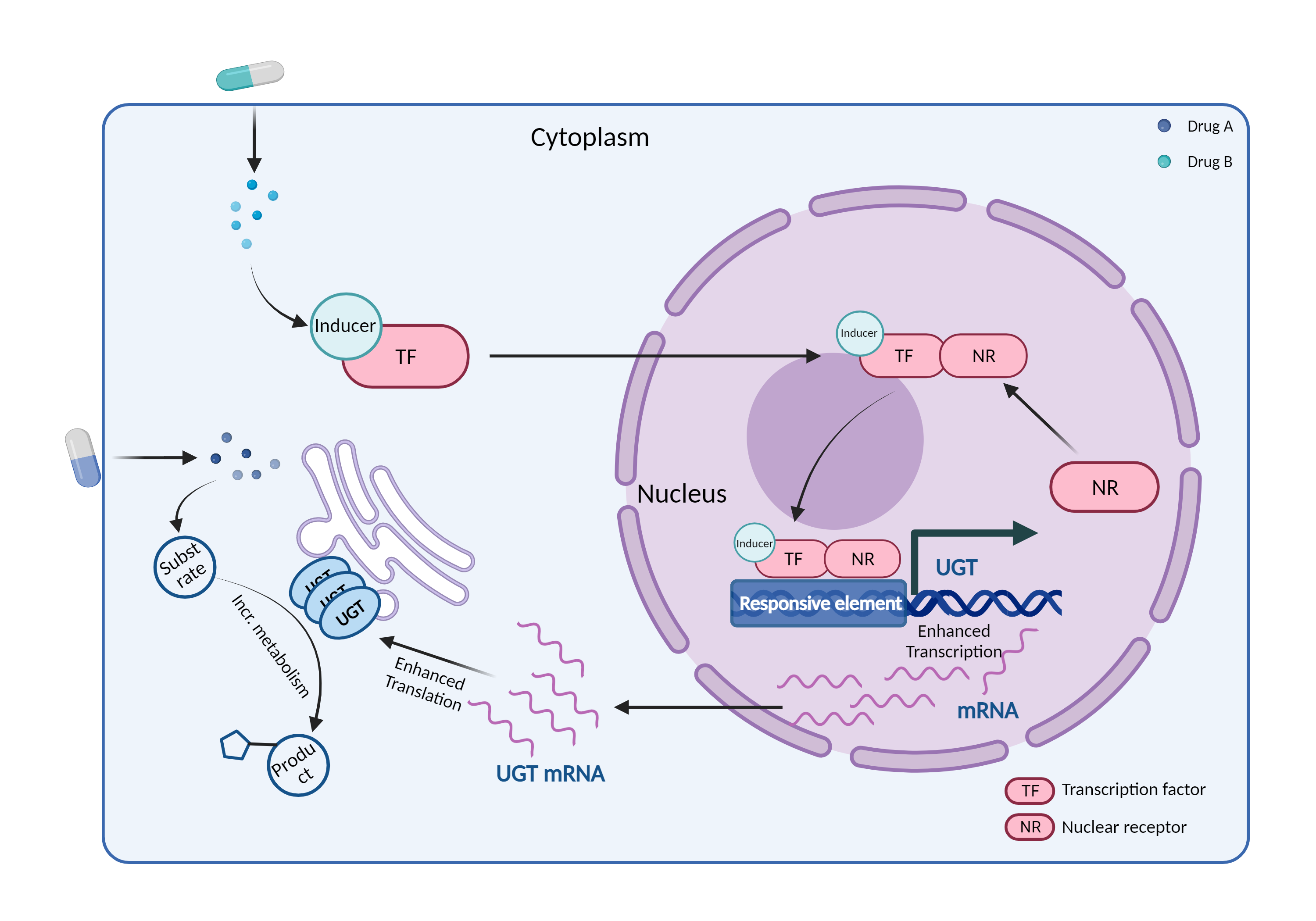
| UGT induction Click to Show/Hide Mechanism Graph | |||||||||
 |
|||||||||
| Drug Name | Carbamazepine | Empagliflozin | |||||||
| Mechanism | UGT2B7 inducer | UGT2B7 substrate | |||||||
| Key Mechanism Factor 1 | |||||||||
| Factor Name | UDP-glucuronosyltransferase 2B7 |
×
Structure
Sequence
MSVKWTSVILLIQLSFCFSSGNCGKVLVWAAEYSHWMNIKTILDELIQRGHEVTVLASSASILFDPNNSSALKIEIYPTSLTKTELENFIMQQIKRWSDLPKDTFWLYFSQVQEIMSIFGDITRKFCKDVVSNKKFMKKVQESRFDVIFADAIFPCSELLAELFNIPFVYSLSFSPGYTFEKHSGGFIFPPSYVPVVMSELTDQMTFMERVKNMIYVLYFDFWFEIFDMKKWDQFYSEVLGRPTTLSETMGKADVWLIRNSWNFQFPYPLLPNVDFVGGLHCKPAKPLPKEMEDFVQSSGENGVVVFSLGSMVSNMTEERANVIASALAQIPQKVLWRFDGNKPDTLGLNTRLYKWIPQNDLLGHPKTRAFITHGGANGIYEAIYHGIPMVGIPLFADQPDNIAHMKARGAAVRVDFNTMSSTDLLNALKRVINDPSYKENVMKLSRIQHDQPVKPLDRAVFWIEFVMRHKGAKHLRVAAHDLTWFQYHSLDVIGFLLVCVATVIFIVTKCCLFCFWKFARKAKKGKND
|
|||||||
| Gene Name | UGT2B7 | ||||||||
| Uniprot ID | UD2B7_HUMAN | ||||||||
| KEGG Pathway | hsa:7364 | ||||||||
| Protein Family | UDP-glycosyltransferase family | ||||||||
| Protein Function |
UDP-glucuronosyltransferase (UGT) that catalyzes phase II biotransformation reactions in which lipophilic substrates are conjugated with glucuronic acid to increase the metabolite's water solubility, thereby facilitating excretion into either the urine or bile (PubMed:10702251, PubMed:15472229, PubMed:15470161, PubMed:18674515, PubMed:18719240, PubMed:19022937, PubMed:23288867, PubMed:23756265, PubMed:26220143, PubMed:17442341). Essential for the elimination and detoxification of drugs, xenobiotics and endogenous compounds (PubMed:15470161, PubMed:18674515, PubMed:23756265). Catalyzes the glucuronidation of endogenous steroid hormones such as androgens (epitestosterone, androsterone) and estrogens (estradiol, epiestradiol, estriol, catechol estrogens) (PubMed:2159463, PubMed:15472229, PubMed:18719240, PubMed:19022937, PubMed:23288867, PubMed:26220143, PubMed:17442341). Also regulates the levels of retinoic acid, a major metabolite of vitamin A involved in apoptosis, cellular growth and differentiation, and embryonic development (PubMed:10702251). Contributes to bile acid (BA) detoxification by catalyzing the glucuronidation of BA substrates, which are natural detergents for dietary lipids absorption (PubMed:23756265). Involved in the glucuronidation of the AGTR1 angiotensin receptor antagonist losartan, caderastan and zolarsatan, drugs which can inhibit the effect of angiotensin II (PubMed:18674515). Also metabolizes mycophenolate, an immunosuppressive agent (PubMed:15470161).
Click to Show/Hide
|
||||||||
| Mechanism Description |
|
||||||||
| Recommended Action | |||||||||
|---|---|---|---|---|---|---|---|---|---|
| Management | Coadministration of empagliflozin with UGT inducers should be avoided if possible. If concomitant use is required, dosage adjustments as well as increased clinical and laboratory monitoring should be considered whenever a UGT inducer is added to or withdrawn from empagliflozin therapy. | ||||||||