
Details of Drug-Drug Interaction
| Drug General Information (ID: DDI10IQD4H) | |||||||||
|---|---|---|---|---|---|---|---|---|---|
| Drug Name | Benzatropine | Drug Info | Acebutolol | Drug Info | |||||
| Drug Type | Small molecule | Small molecule | |||||||
| Therapeutic Class | Antiparkinson Agents | Antihypertensive Agents | |||||||
| Structure | |||||||||
| Mechanism of Benzatropine-Acebutolol Interaction (Severity Level: Moderate) | |||||||||
|---|---|---|---|---|---|---|---|---|---|
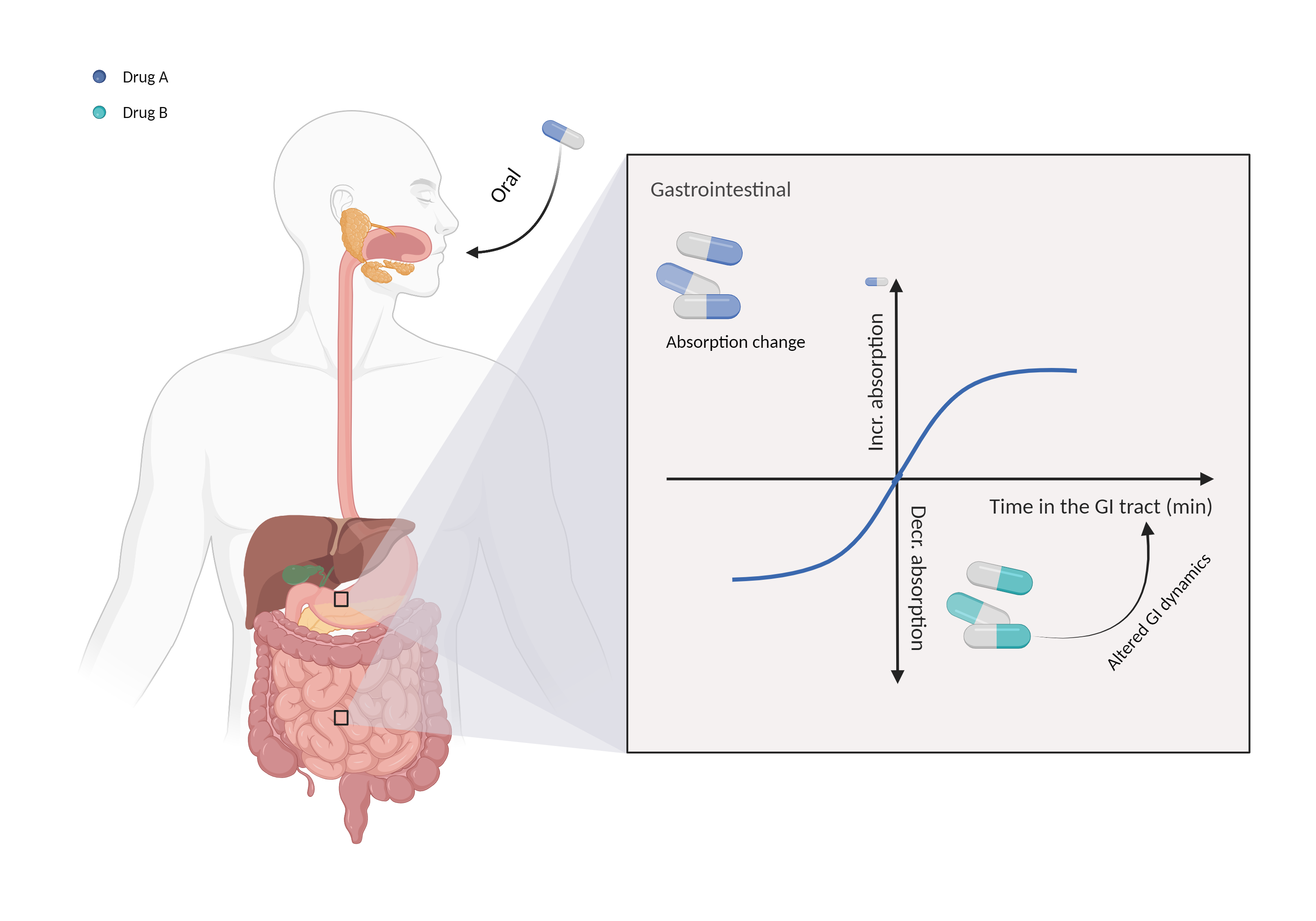
| Altered gastrointestinal dynamics Click to Show/Hide Mechanism Graph | |||||||||
 |
|||||||||
| Drug Name | Benzatropine | Acebutolol | |||||||
| Mechanism 1 | Decrease gastrointestinal motility | Absorption is influenced by gastrointestinal motility | |||||||
| Key Mechanism Factor 1 | |||||||||
| Factor Name | Gastrointestinal Motility | ||||||||
| Factor Description | Gastrointestinal motility is an important factor in determining the absorption of orally administered drugs, and it controls the residence time of the drug in the digestive tract. | ||||||||
| Mechanism Description |
|
||||||||
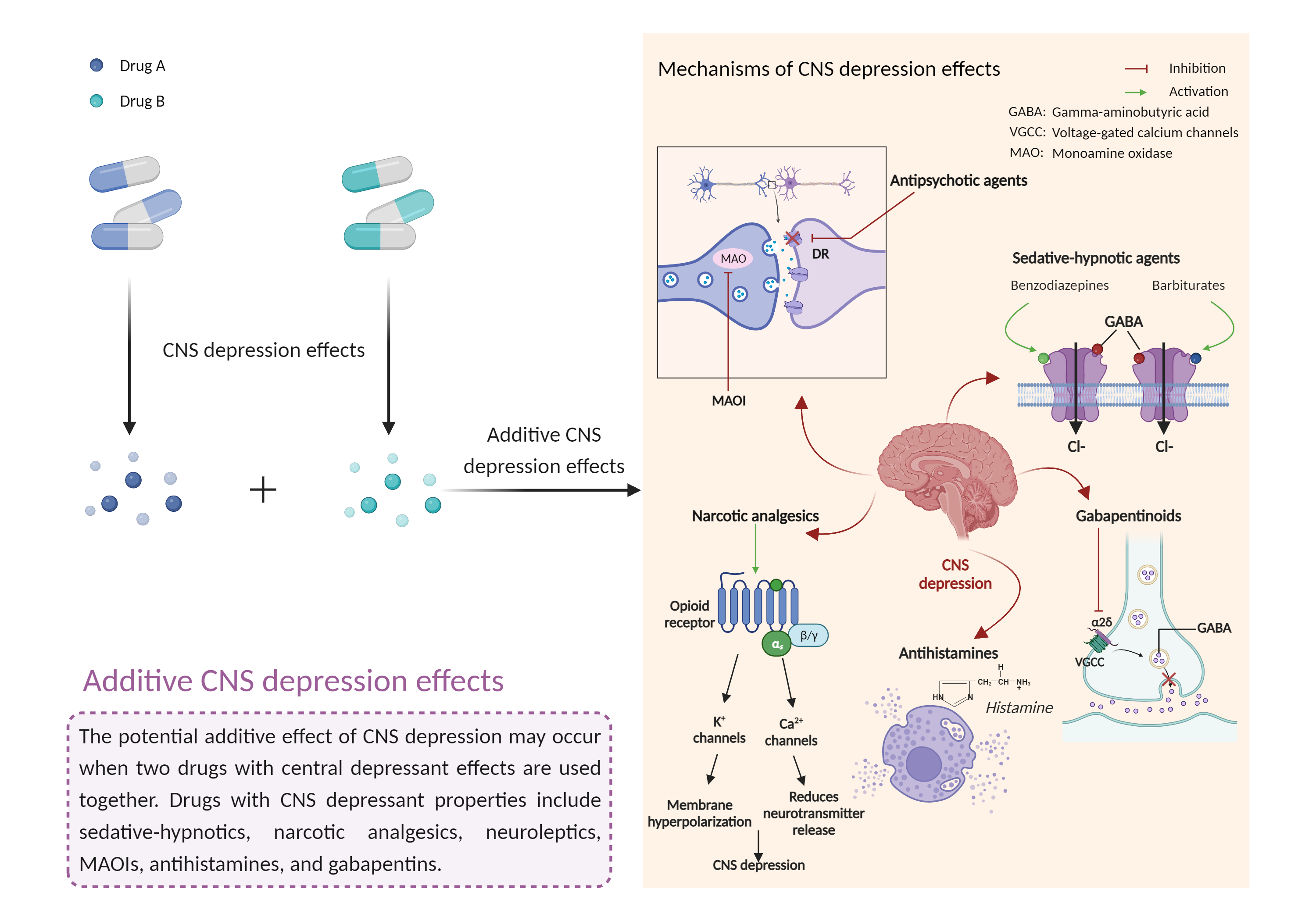
| Additive CNS depression effects Click to Show/Hide Mechanism Graph | |||||||||
 |
|||||||||
| Drug Name | Benzatropine | Acebutolol | |||||||
| Mechanism 2 | CNS depression effects | CNS depression effects | |||||||
| Key Mechanism Factor 2 | |||||||||
| Factor Name | CNS depression effects | ||||||||
| Factor Description | CNS depressants are drugs that inhibit or suppress brain activity and can reduce mental and physical processes. Excessive CNS depression can lead to decreased heart rate, slow breathing (less than 10 breaths per minute), extreme confusion or loss of memory, nausea and vomiting, poor judgment, blue lips or fingertips, irritability and aggression, and clammy or cold skin. | ||||||||
| Mechanism Description |
|
||||||||
| Antagonize the effects of beta receptor blockers Click to Show/Hide Mechanism Graph | |||||||||
| Drug Name | Benzatropine | Acebutolol | |||||||
| Mechanism 3 |
Tachycardia Muscarinic acetylcholine receptor Antagonist |
Bradycardia Beta adrenergic receptor Antagonist |
|||||||
| Key Mechanism Factor 3 | |||||||||
| Factor Name | Muscarinic acetylcholine receptor M | Structure Sequence | |||||||
| Protein Family | G-protein coupled receptor 1 family | ||||||||
| Protein Function |
The muscarinic acetylcholine receptor mediates various cellular responses, including inhibition of adenylate cyclase, breakdown of phosphoinositides and modulation of potassium channels through the action of G proteins. Primary transducing effect is Pi turnover.
Click to Show/Hide
|
||||||||
| Key Mechanism Factor 4 | |||||||||
| Factor Name | Adrenergic receptor beta | Structure Sequence | |||||||
| Protein Family | G-protein coupled receptor 1 family | ||||||||
| Protein Function |
Beta-adrenergic receptors mediate the catecholamine-induced activation of adenylate cyclase through the action of G proteins. This receptor binds epinephrine and norepinephrine with approximately equal affinity. Mediates Ras activation through G(s)-alpha- and cAMP-mediated signaling. Involved in the regulation of sleep/wake behaviors (PubMed:31473062).
Click to Show/Hide
|
||||||||
| Mechanism Description |
|
||||||||
| Mechanism 4 |
Tachycardia Muscarinic acetylcholine receptor Antagonist |
Bradycardia Beta-1 adrenergic receptor Antagonist |
|||||||
| Key Mechanism Factor 5 | |||||||||
| Factor Name | Muscarinic acetylcholine receptor M | Structure Sequence | |||||||
| Protein Family | G-protein coupled receptor 1 family | ||||||||
| Protein Function |
The muscarinic acetylcholine receptor mediates various cellular responses, including inhibition of adenylate cyclase, breakdown of phosphoinositides and modulation of potassium channels through the action of G proteins. Primary transducing effect is Pi turnover.
Click to Show/Hide
|
||||||||
| Key Mechanism Factor 6 | |||||||||
| Factor Name | Adrenergic receptor beta-1 |
×
Structure
Sequence
MGAGVLVLGASEPGNLSSAAPLPDGAATAARLLVPASPPASLLPPASESPEPLSQQWTAGMGLLMALIVLLIVAGNVLVIVAIAKTPRLQTLTNLFIMSLASADLVMGLLVVPFGATIVVWGRWEYGSFFCELWTSVDVLCVTASIETLCVIALDRYLAITSPFRYQSLLTRARARGLVCTVWAISALVSFLPILMHWWRAESDEARRCYNDPKCCDFVTNRAYAIASSVVSFYVPLCIMAFVYLRVFREAQKQVKKIDSCERRFLGGPARPPSPSPSPVPAPAPPPGPPRPAAAAATAPLANGRAGKRRPSRLVALREQKALKTLGIIMGVFTLCWLPFFLANVVKAFHRELVPDRLFVFFNWLGYANSAFNPIIYCRSPDFRKAFQRLLCCARRAARRRHATHGDRPRASGCLARPGPPPSPGAASDDDDDDVVGATPPARLLEPWAGCNGGAAADSDSSLDEPCRPGFASESKV
|
|||||||
| Gene Name | ADRB1 | ||||||||
| Uniprot ID | ADRB1_HUMAN | ||||||||
| KEGG Pathway | hsa:153 | ||||||||
| Protein Family | G-protein coupled receptor 1 family | ||||||||
| Protein Function |
Beta-adrenergic receptors mediate the catecholamine-induced activation of adenylate cyclase through the action of G proteins. This receptor binds epinephrine and norepinephrine with approximately equal affinity. Mediates Ras activation through G(s)-alpha- and cAMP-mediated signaling. Involved in the regulation of sleep/wake behaviors (PubMed:31473062).
Click to Show/Hide
|
||||||||
| Mechanism Description |
|
||||||||
| Recommended Action | |||||||||
|---|---|---|---|---|---|---|---|---|---|
| Management | Patients should be monitored for potentially excessive CNS adverse effects (e.g., drowsiness, dizziness, lightheadedness, confusion, blurred vision) if anticholinergic agents are used in combination with beta blockers. Patients should be counseled to avoid activities requiring mental alertness until they know how these agents affect them. | ||||||||