
Details of Drug-Drug Interaction
| Drug General Information (ID: DDI0M6B1PJ) | |||||||||
|---|---|---|---|---|---|---|---|---|---|
| Drug Name | Naproxen | Drug Info | Acetylsalicylic acid | Drug Info | |||||
| Drug Type | Small molecule | Small molecule | |||||||
| Therapeutic Class | Nsaids/Analgesics | Analgesics | |||||||
| Structure | |||||||||
| Mechanism of Naproxen-Acetylsalicylic acid Interaction (Severity Level: Moderate) | |||||||||
|---|---|---|---|---|---|---|---|---|---|
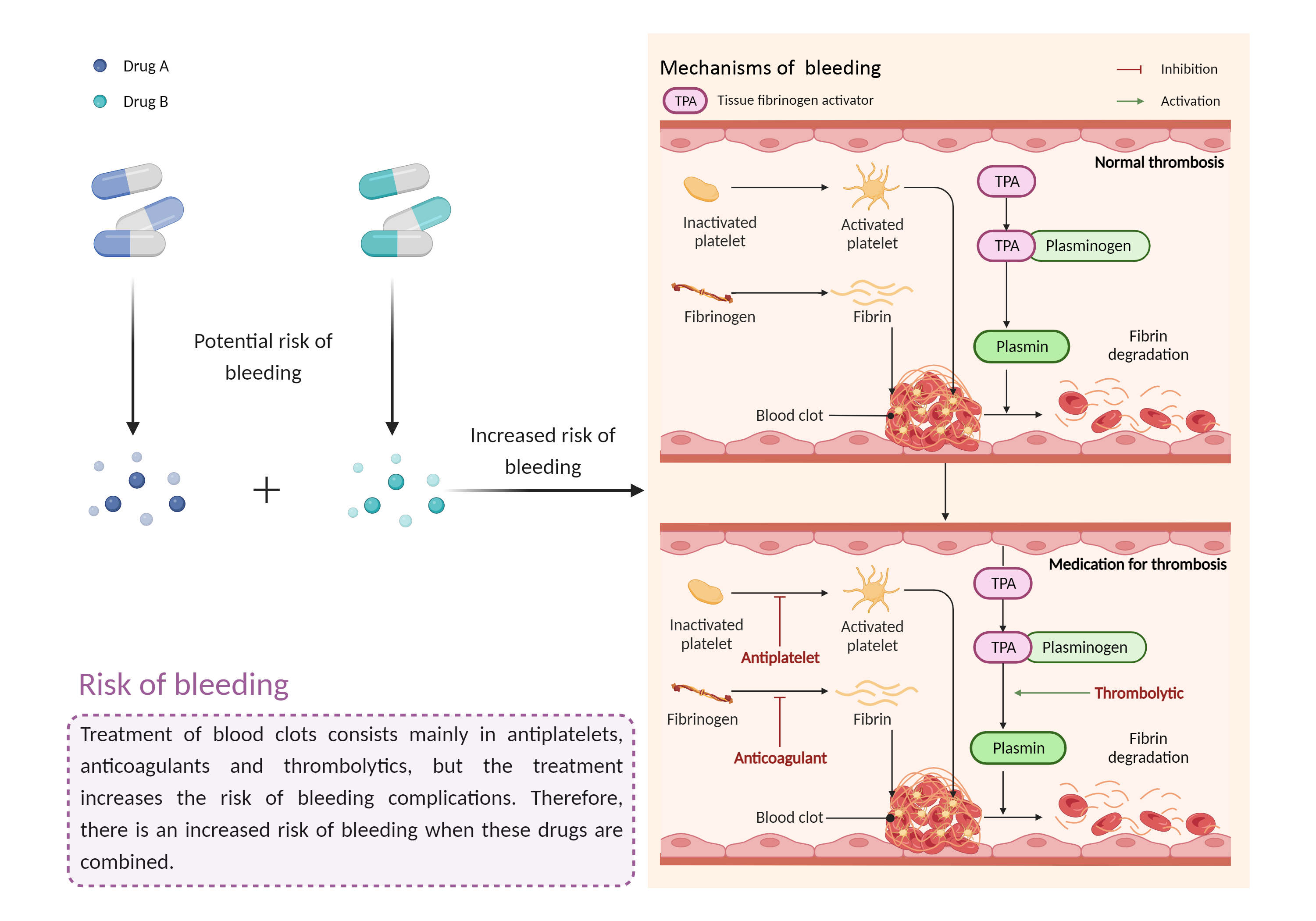
| Increased risk of bleeding Click to Show/Hide Mechanism Graph | |||||||||
 |
|||||||||
| Drug Name | Naproxen | Acetylsalicylic acid | |||||||
| Mechanism |
Risk of bleeding Antiplatelet effects |
Risk of bleeding Antiplatelet |
|||||||
| Key Mechanism Factor 1 | |||||||||
| Factor Name | Bleeding | ||||||||
| Factor Description | Patients may be at risk for bleeding when the outcome of a disease or disease treatment confounds the standard mechanisms for maintaining hemostasis. Signs or symptoms of abnormal bleeding include: bleeding that takes a long time to stop (including nosebleeds, bleeding gums, bleeding from cuts and abrasions, and menstrual bleeding); severe unexplained bruising, or bruising that becomes larger; blood in the urine or stool, etc. | ||||||||
| Mechanism Description |
|
||||||||
| Recommended Action | |||||||||
|---|---|---|---|---|---|---|---|---|---|
| Management | Until more information is available, patients receiving low-dose aspirin for cardioprotection should avoid the regular use of NSAIDs including ibuprofen, indomethacin, naproxen, and tiaprofenic acid. Occasional, single use may be acceptable, as the risk from any attenuation of the antiplatelet effect of low-dose aspirin is likely to be minimal given the long-lasting effect of aspirin on platelets. If routine NSAID therapy is necessary, diclofenac may be a viable alternative. In the retrospective study implicating ibuprofen, 75 mg twice daily of delayed-release diclofenac did not interfere with the antiplatelet activity of aspirin. Other noninterfering alternatives for pain include acetaminophen, celecoxib, or narcotic analgesics. In any case, caution is advised whenever aspirin is combined with a NSAID due to the potential for additive GI toxicity. Patients should be advised to take the medications with food and to immediately report signs and symptoms of GI ulceration and bleeding such as abdominal pain, bloating, sudden dizziness or lightheadedness, nausea, vomiting, hematemesis, anorexia, and melena. | ||||||||